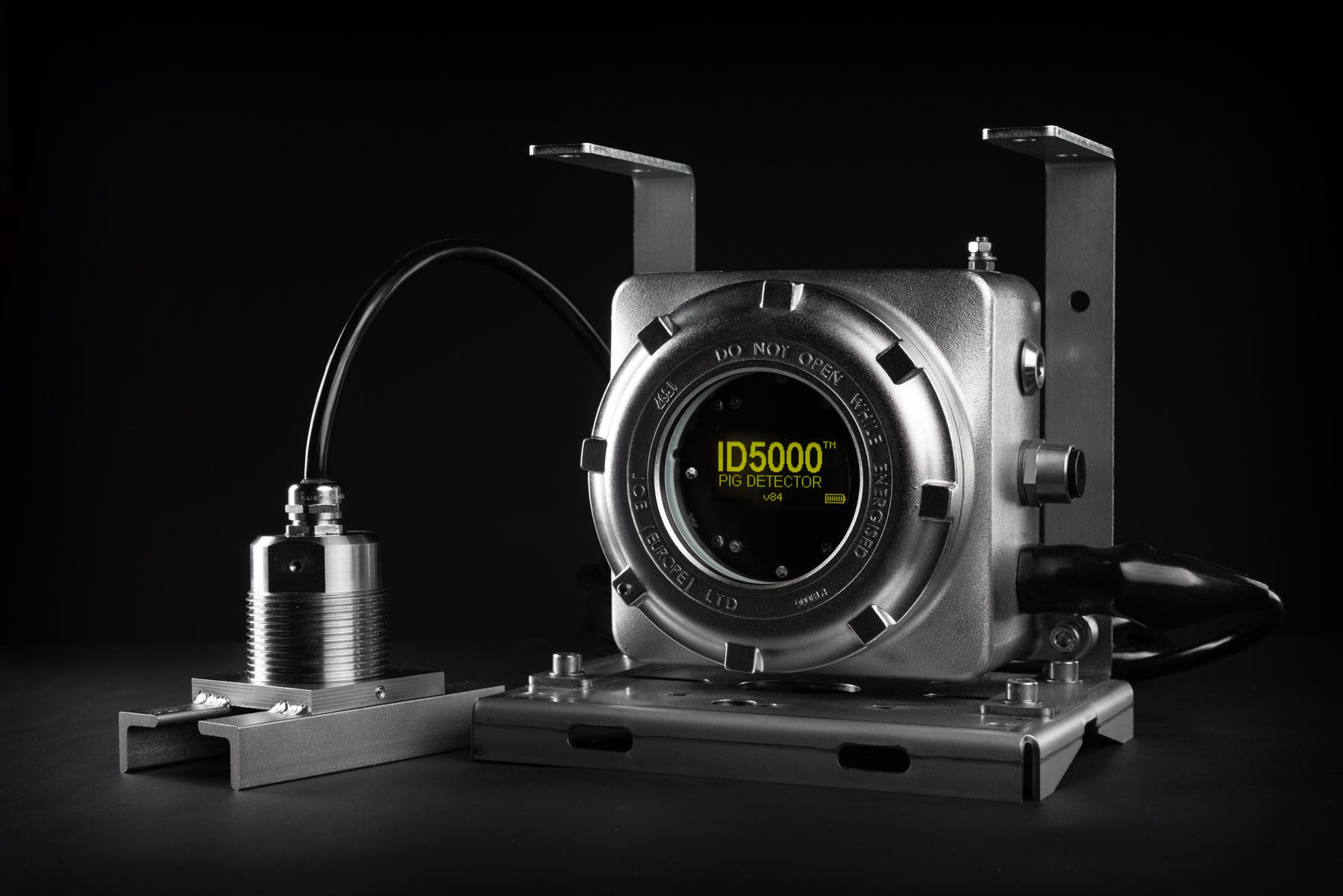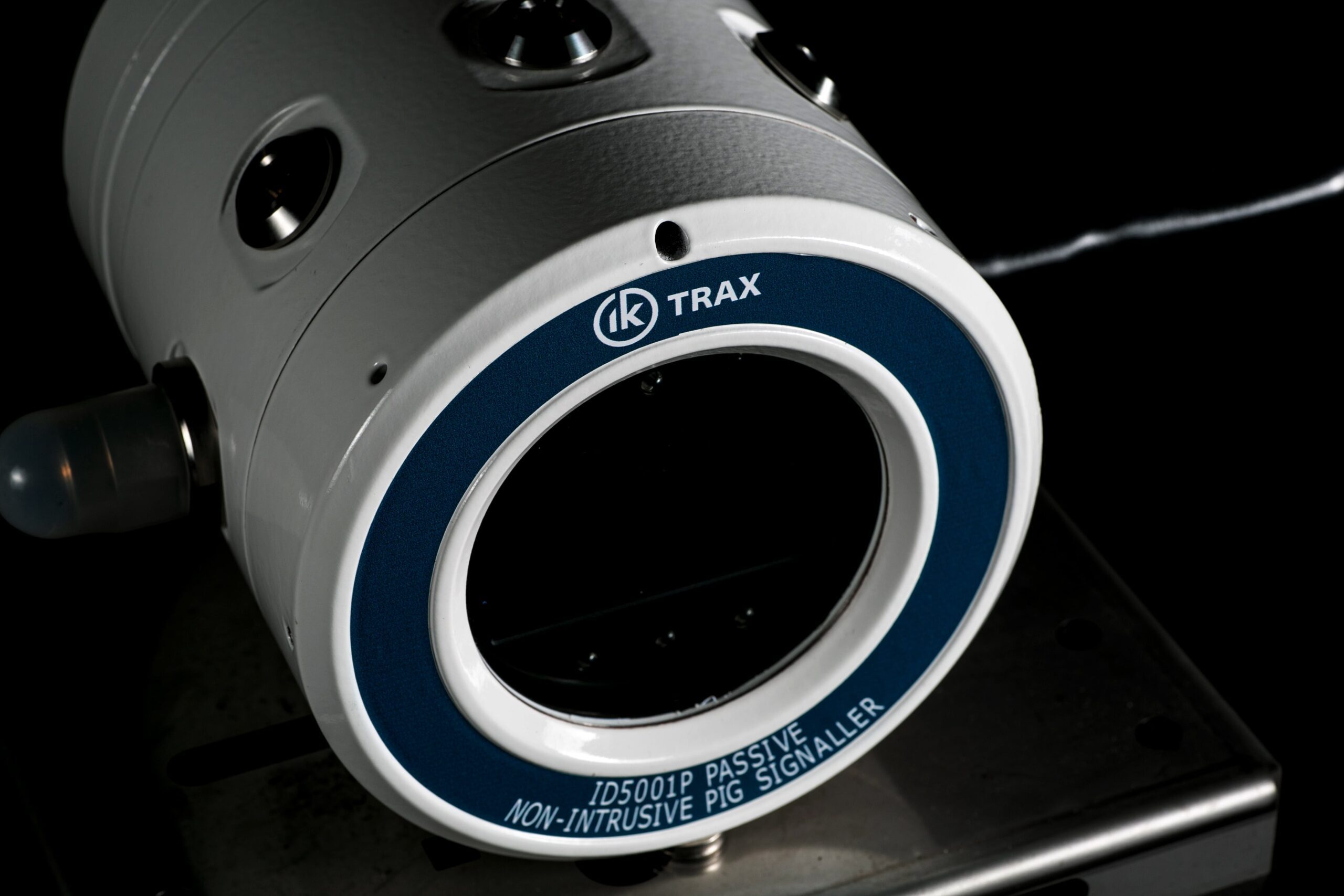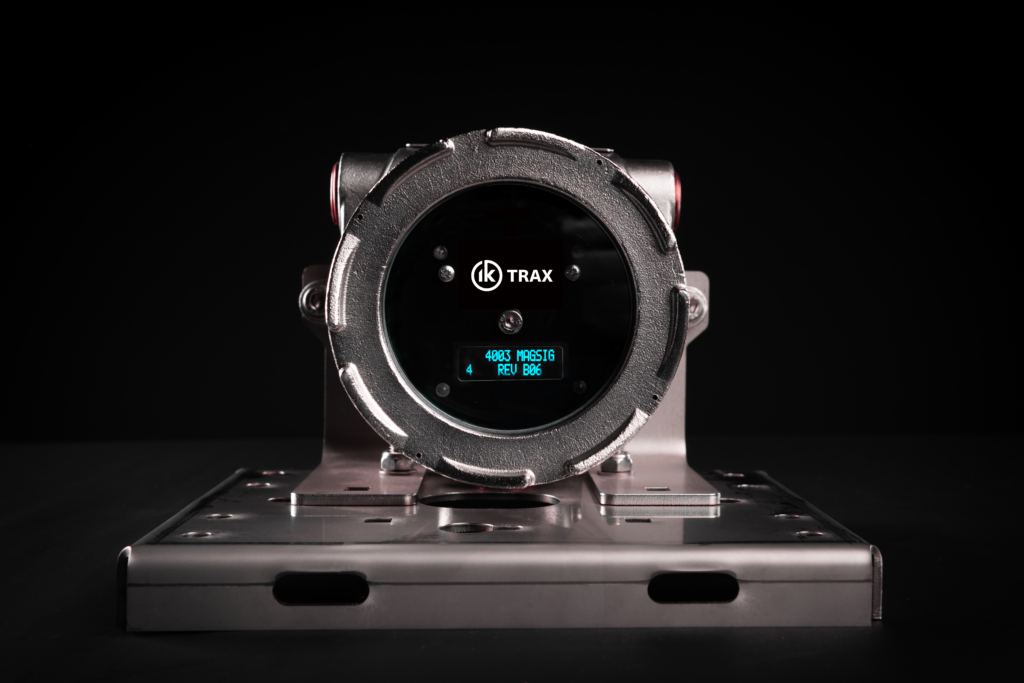
The Role of Pig Signallers in Pipeline Operations
Pig signallers play a vital role in pigging assurance. They are installed at launchers, receivers and strategic points along a pipeline – such as valve stations or bends – to confirm when a pig has passed a specific location. This information is essential for maintaining control of the operation. Without a clear indication of pig passage, operators may be unsure of its position, potentially causing delays while the pig is located. If a pig does stall, signallers help narrow the search to the section between the last confirmed points, enabling faster and safer intervention.
Reliable pig signalling also helps operators minimise unplanned downtime and keeps operations on schedule . As regulatory expectations and safety standards continue to rise, many operators are reconsidering the use of older intrusive equipment in favour of safer, more flexible non-intrusive systems.
For many years, intrusive mechanical signallers were the standard choice. However, the industry is now moving towards safer, non-intrusive and more data-rich solutions. This shift is driven by increase in awareness around health and safety, a desire to reduce environmental risk, and a growing need for clearer, more flexible access to operational data. Modern non-intrusive systems provide this additional insight while avoiding the risks associated with intrusive designs.
Why the Shift Towards Non-Intrusive Signalling is Accelerating
Non-intrusive pig signallers are increasingly becoming the preferred option across the industry and the reasons are clear. Unlike intrusive pig signallers, which require a physical penetration into the pipeline wall, non-intrusive units are simply strapped to the outside of the pipe using ratchet straps or stainless-steel banding. This avoids any pressure-related risk and eliminates the need for specialist installation or hot-work procedures. This process is quicker, safer and requires minimal training.
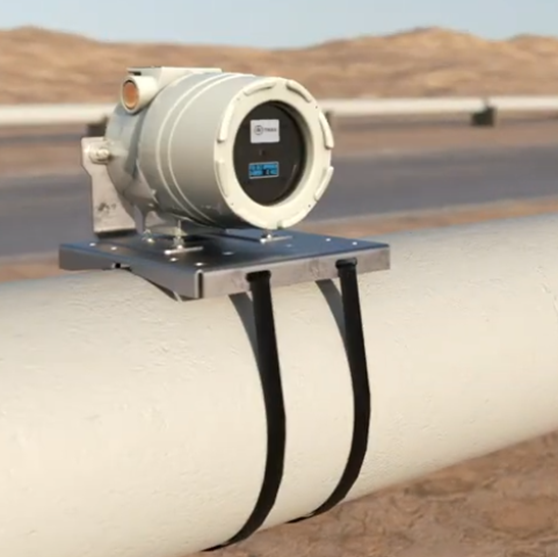
Intrusive signallers use a mechanical trigger and flag: when the pig pushes against the internal trigger, a flag pops up on the surface to indicate passage and/or sends a signal to the control room. While simple, this mechanism relies on moving parts exposed to wear, corrosion and potentially jamming. Non-intrusive signallers display the pig passage event on a digital interface. This removes mechanical failure points and provides a more reliable, modern method of confirming passage.
While some intrusive signallers may appear more economical upfront, they typically come with a much higher total cost of ownership. Installation time, maintenance requirements, field repair costs and the need for trained technicians all adds up. Intrusive units also rely on mechanical components, which can wear over time and lead to failure. The need to penetrate the pipeline creates an inherent risk – any penetration has the potential to develop into a leak path, allowing product to escape and potentially impact the surrounding environment. Non-intrusive signallers remove these concerns entirely. With no pipe penetration, the line remains sealed, leak paths are eliminated, and operators benefit from a cleaner, safer and more reliable signalling method.
Modern non-intrusive systems also offer far more advanced communication and data options. Pig passage events can be transmitted remotely to SCADA/control systems via RS485 MODBUS, 4-20mA HART or satellite communications, and time-stamped data is automatically stored on the unit. Operators no longer need to be physically present at the point of passage to collect information, and signaller parameters can be adjusted to suit operational requirements. Combined, these factors provide greater flexibility, improved visibility of pig movement and enhanced operational assurance – all without the risks associated with intrusive equipment.
How Non-Intrusive Pig Signallers Work
Non-intrusive pig signallers detect the passage of a pig by monitoring changes as it moves past the unit, rather than relying on a trigger inside the pipe. They use sensors mounted on the outside of the pipeline to identify physical effects generated by the pig itself. This allows the signaller to confirm passage based on what it detects through the pipe wall, rather than requiring any contact with the pig or product.
Several detection methods are commonly used:
Magnetic Detection
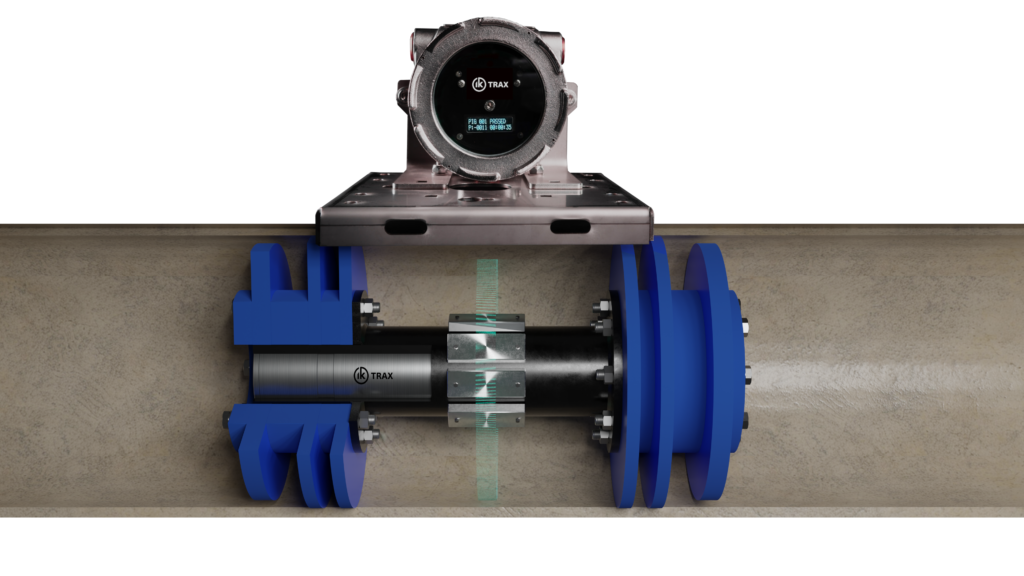
When a pig contains magnets, it produces a magnetic field as it travels along the pipeline. Magnetic non-intrusive signallers monitor changes in this field. As the pig approaches, passes and moves away from the unit, the sensor records a distinct rise and fall of the magnetic field, which the system interprets as a confirmed passage.
Ultrasonic Detection
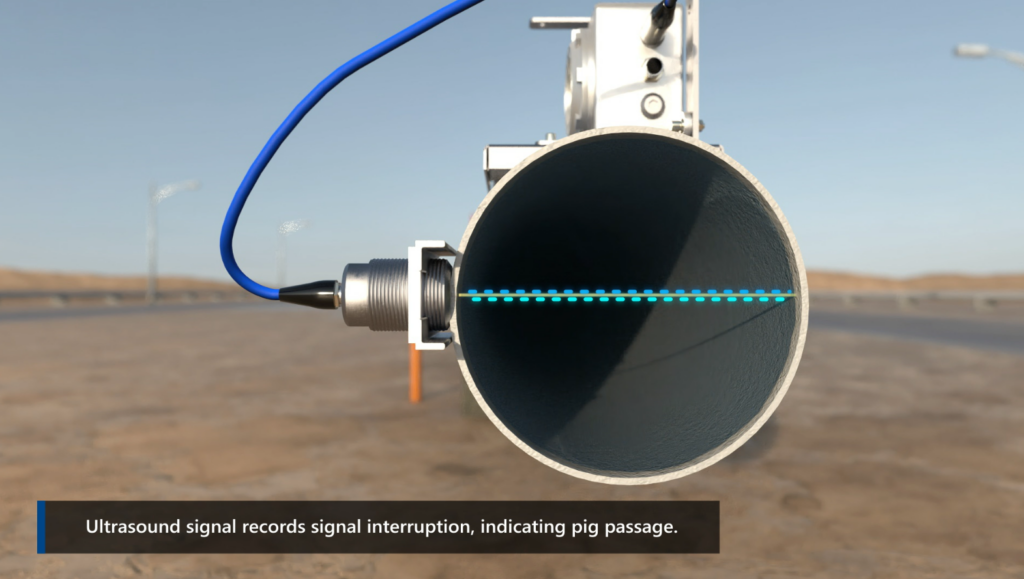
Ultrasonic signallers send ultrasonic pulses into the pipe wall and provided that the line is filled with liquid, the unit can see a reflection of the pulses from the other side of the pig. When the pig moves past the signaller, it disrupts their return path. The system recognises this disturbance as a passage event, making the method particularly effective on liquid-filled pipelines.
Acoustic Detection
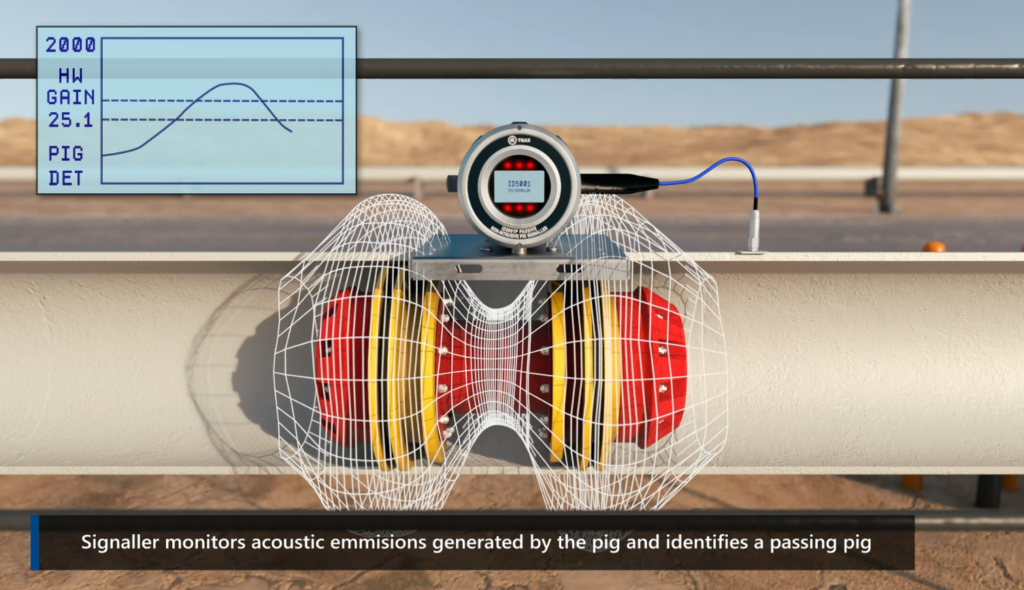
Some non-intrusive systems monitor the acoustic signature produced by the pig itself. As pigs move through the pipe, they generate characteristic sounds. The signallers listen for the change in noise as the pig approaches and uses them to determine the moment of passage – a useful option when pigs do not contain magnets or ultrasonic methods are not suitable.
As the pig approaches, the signaller will detect the change in sound. Once the pig passes, the sound levels will return to the default and a pig passage will be signalled.
If you’d like a more detailed look at how intrusive and non‑intrusive systems differ at a technical level, see our Deep Dive on how non‑intrusive pig signallers work.
When to Use Each Technology (Magnetic, Ultrasonic, Acoustic)
Different non-intrusive pig signaller technologies suit different pipeline conditions and pig types. Selecting the right one depends on factors such as pipeline medium, pig design and expected noise environment. Choosing the right technology ensures reliable detection and reduces the risk of false or missed indications.
Magnetic Signallers
Magnetic pig signallers are the most widely used and work effectively when the pig contains magnets. This method is simple, reliable and suitable for any pipeline medium – gas, liquid or multiphase – if the pig itself is magnetised.
Use magnetic signallers when:
- The pig contains strong permanent magnets
- You need a robust, proven detection method that works across all mediums
- Noise or vibration may make other methods less reliable
Ultrasonic Signallers
Ultrasonic signallers are particularly used in liquid-filled pipelines, where the pig’s presence causes a clear disturbance to the ultrasonic path being monitored. They are a good option for pigs that cannot accommodate magnets or when magnets are not practical for the operation. Use ultrasonic signallers when:
- The pipeline is liquid-filled
- Pigs do not contain magnets
Acoustic Signallers
Acoustic pig signallers detect pigs by monitoring the sound they generate as they move through the pipeline. Each pig creates a specific acoustic pattern, and the signaller listens for this change to confirm passage. This method is useful where pigs cannot be fitted with magnets and where ultrasonic technology is not suitable.
However, acoustic signallers come with important limitations. Their performance is highly dependent on the noise environment around the line and the specific pig design. Due to different types of pigs producing different levels of noise, the system often needs to be calibrated for the individual pig to ensure reliable detection. This means acoustic signallers do not operate seamlessly across a broad range of pig types. In noisy or high-vibration environments, detection can be more challenging – reflecting the practical issues seen in real operating conditions.
Some of these risks can be mitigated by placing acoustic signallers in optimal locations. For example, avoiding installation too close to valves, pumps or other high-noise sources can significantly improve detection accuracy. Providers can also give guidance during planning to help identify sections of pipeline where the pig’s acoustic signature is more likely to be heard clearly.
Because of these limitations, acoustic signallers are typically recommended only when:
- The pig cannot contain magnets, and
- The pipeline is not liquid filled (where ultrasonic methods generally perform better)
They remain a valuable option for the right scenario, but they are not universally suitable.
A note on project specifications
In some cases, a particular signaller type may be listed in the project specification. However, specifications are not always aligned with the practical needs of the operation. With the right discussion and technical context, it often becomes clear that the specified technology is not the most suitable option for the pipeline medium, pig type or noise environment. Providing this guidance early helps ensure a more reliable installation and better outcomes for the operator.
For a closer look at how different pig types, mediums and operating conditions influence technology choice, see Pig Signaller Buyer Guide – Choosing the Right Technology for Your Pipeline
Benefits of Modern Non-Intrusive Systems
Beyond installation and safety advantages, non-intrusive signallers offer significant benefits when it comes to data quality, reliability and operational assurance. Intrusive signallers rely on a mechanical flag inside the pipeline which must be manually reset after each pig passage. If this reset step is missed – or if the internal trigger fails – there is no clear way to know. This can create uncertainty around whether a pig has genuinely passed or whether the equipment simply wasn’t reset correctly. Mechanical components also wear over time, increasing the risk of failure.
Non-intrusive signallers avoid these issues entirely. Their operation is fully electronic, making testing and diagnostics much easier. The units automatically reset after a pre-set period, so operators do not need to worry about manual intervention or the confusion caused by missed resets. Because events are recorded electronically with time and date information, operators have a clear traceable audit trail of each passage, improving confidence during multi-pig operations or extended campaigns. Several IK Trax signallers for example, log up to 99 events with time-stamped data, which can be viewed locally or transmitted remotely.
Another major benefit is communication flexibility. Intrusive signallers typically provide volt free dry contact outputs, limiting how pig passage data can be integrated into wider systems. By contrast, non-intrusive signallers support a range of modern communication options including 4-20mA, MODBUS and Bluetooth, as well as long-range wireless options such as LoRaWAN or satellite communication for remote or unmanned sites. These capabilities make them particularly suitable for remote block valve stations, cross-country pipelines, temporary pigging operations and unmanned facilities, where physical access is limited and reliable remote indication is essential.
Because non-intrusive signallers have no moving parts, they also offer better long-term reliability, with almost no wear-related failures compared to intrusive devices. Finally non-intrusive signallers integrate more naturally into today’s digital pipeline environments. As more operators transition to remote monitoring and centralised control rooms, the ability to feed accurate, real-time data into SCADA and other control systems becomes increasingly important. Non-intrusive signallers support this shift by providing consistent, digital and easily transferable data, something intrusive technologies were never designed to do.
Final Considerations for Choosing the Right Signaller
While each non-intrusive signaller technology has its place, magnetic signallers are often the most effective and reliable option when the pig can accommodate magnets. The cost of adding magnets is comparatively low, and doing so opens the door to a solution that performs consistently across all pipeline mediums and in a wider range of operating environments. For this reason, magnetising the pig is generally recommended wherever it is practical to do so.
Ultrasonic and acoustic signallers remain important alternatives for scenarios where magnets cannot be used or where the pipeline medium dictates a different detection method. Each technology comes with its own strengths and limitations, so understanding the pipeline conditions, pig type and noise environment is key to selecting the most suitable option.
In some projects, a specific signaller type may be listed in the technical documentation. While this can provide useful initial guidance, it is always worth considering whether conditions on the pipeline allow for a more reliable or more versatile option. Taking a moment to review the pig type, the medium and the overall operating environment can help ensure the signaller chosen will provide the best performance and the highest level of assurance during the pigging operation.