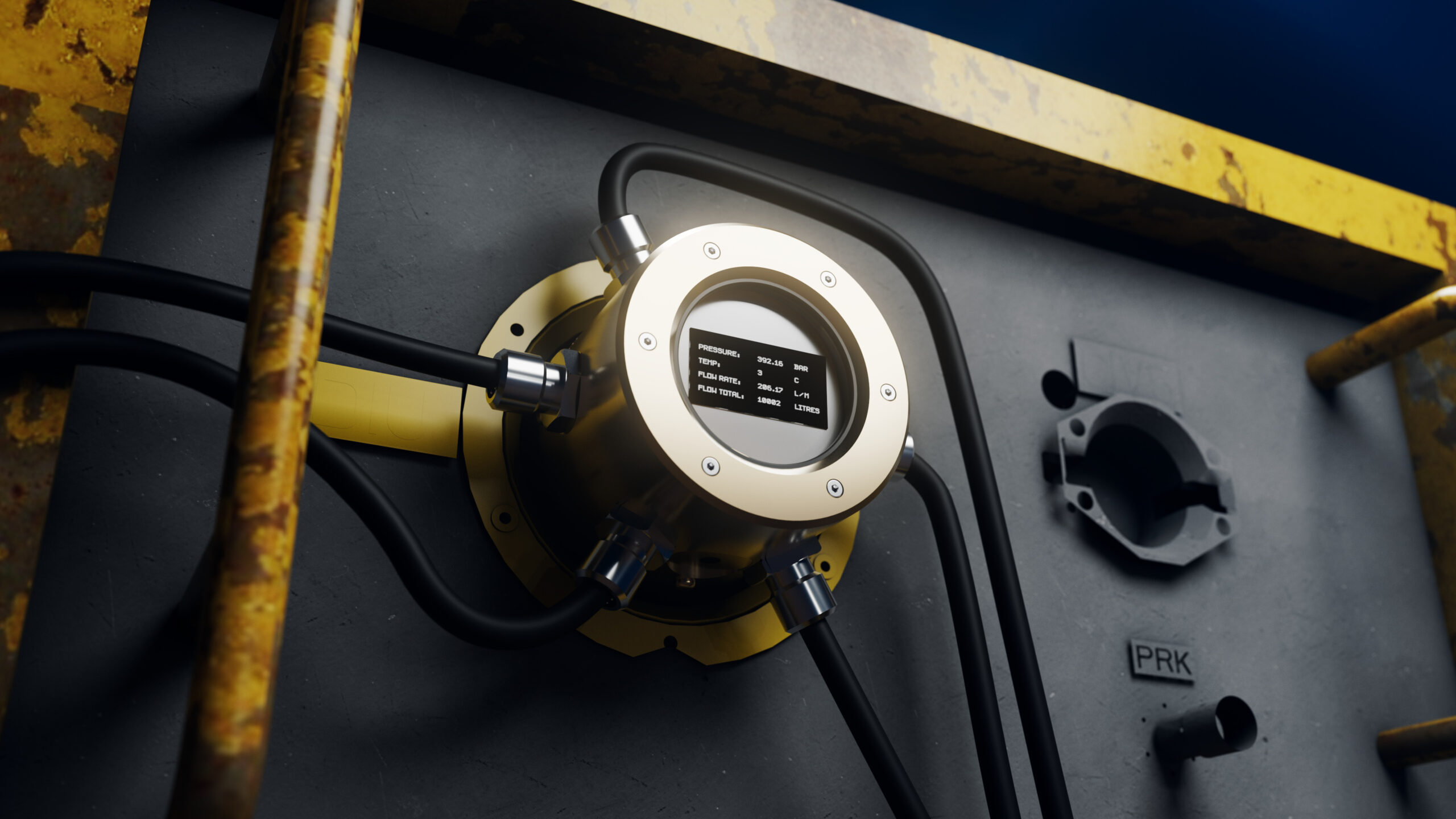
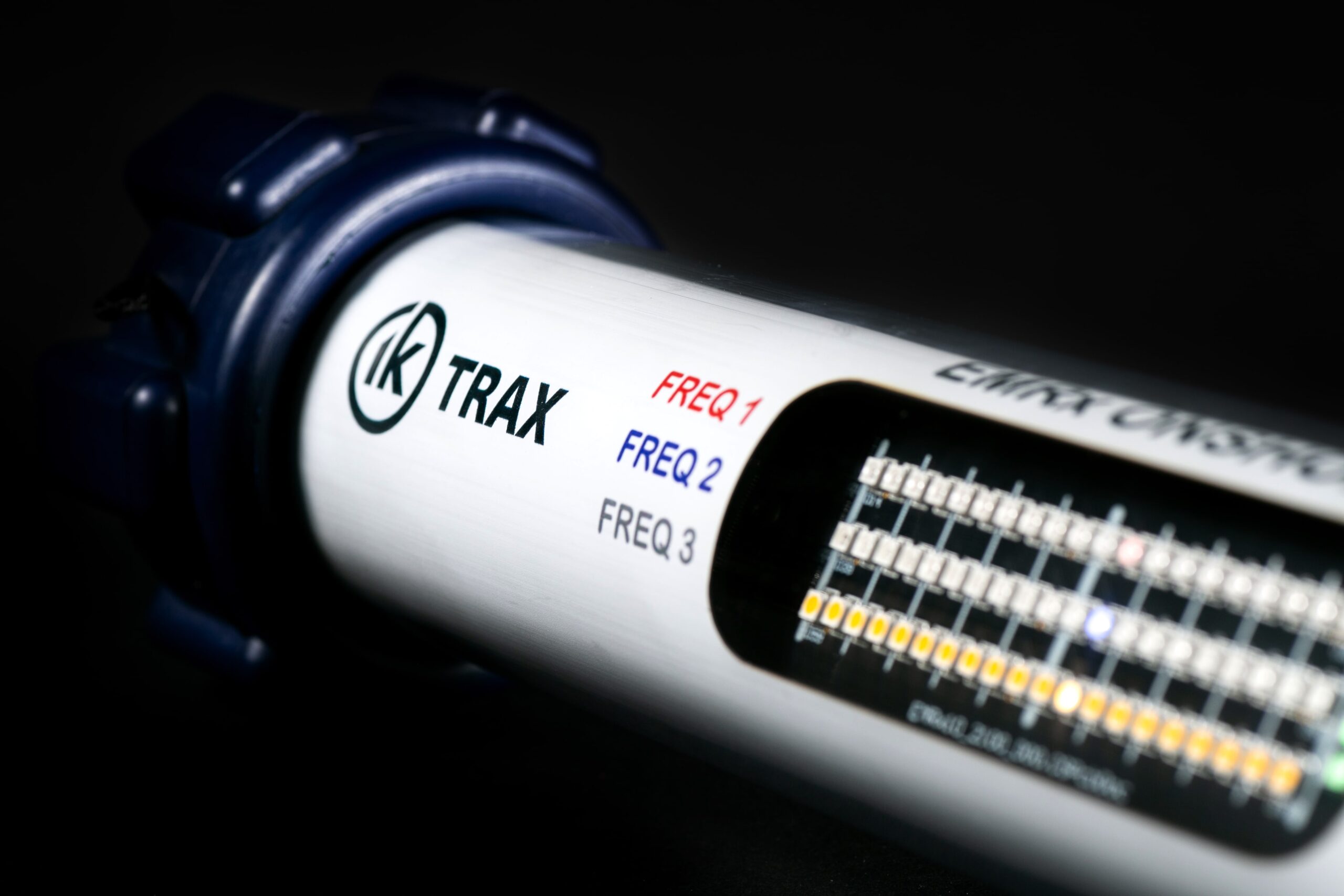
In pipeline operations, selecting the right pig signaller is essential for safe, efficient and reliable pigging. While datasheets outline technical specifications, real-world conditions often demand a more nuanced approach. Over-standardising or selecting technology solely on an outdated specification can result in poor performance, missed detections, or unnecessary operational risk.
This Buyer’s Guide breaks down the three primary pig signaller technologies – magnetic, ultrasonic and acoustic – and explains how each performs in practice, helping you identify the most suitable solution for your pipeline.
Understanding the Three Main Technologies
Magnetic Pig Signallers – Reliable, Targeted Detection Across Multiple Pig Types
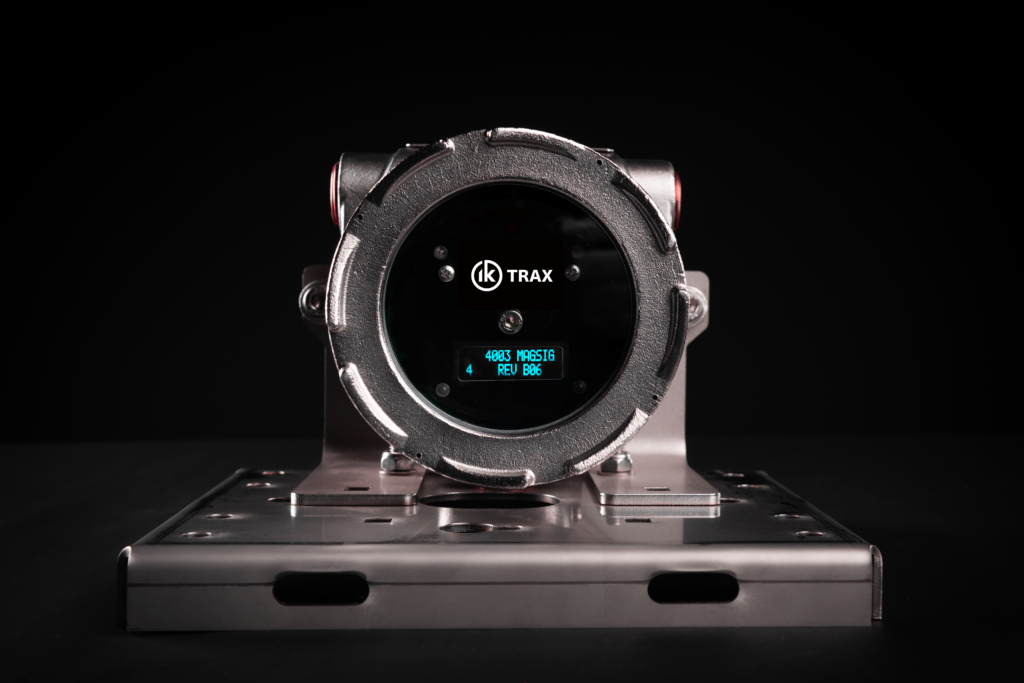
Magnetic pig signallers detect changes in magnetic field as a pig carrying magnets passes the sensor. Because magnets can be installed onto most pig types, magnetic detection is one of the most flexible and widely applicable technologies available.
This approach is straightforward, highly dependable and offers a clear, unambiguous trigger signal that is not influenced by pipeline noise or vibration. The cost of adding magnets is comparatively low, making magnetic detection easy to adopt in most operations.
Strengths
- Works with a wide variety of pig types once fitted with magnets (foam pigs, polyurethane pigs, spheres, bi-directional pigs etc)
- Low false-positive rate, thanks to detection based on magnetic field rather than acoustic or vibration signatures.
- Simple, robust and low-maintenance, with excellent on-site reliability.
- Suitable for both liquid and gas pipelines, making it a versatile choice across many operating environments.
- Cost-effective for routine cleaning, batching, dewatering and general maintenance pigging.
Considerations
- Magnets must be fitted to the pig – either during manufacture or retrofitted later.
Ultrasonic Pig Signallers – Versatile Detection in Liquid-Filled Pipelines
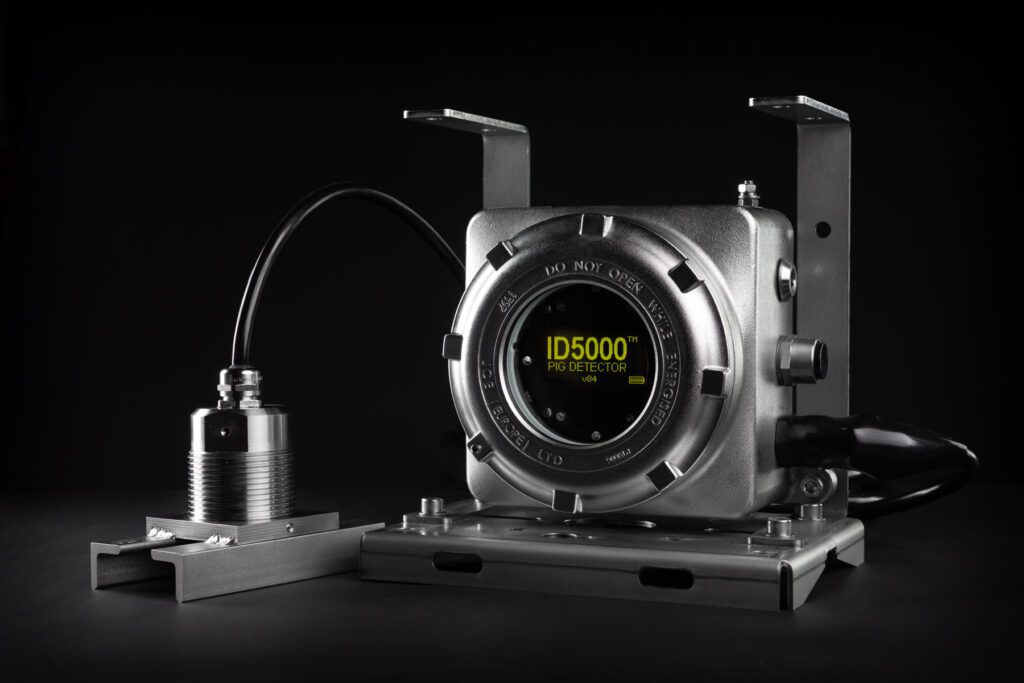
Ultrasonic pig signallers required a liquid-filled pipeline to operate effectively. They work by transmitting pulses through the pipe wall and detecting changes when a pig interrupts the signal path. They can detect any pig type, making them a strong choice for systems that use a variety of cleaning or speciality tools.
Strengths
- Suitable for all pig types in liquid systems.
- Highly versatile.
- Can assist with identifying or confirming the location of stationary pigs.
- Effective in operations requiring adaptable detection using a variety of pig types.
Considerations
- Only effective in liquid-filled pipelines; not suited for gas systems.
- Requires correct installation and good coupling to ensure accurate detection.
- Performance can vary if the line has inconsistent liquid fill or large debris.
- May require more precise setup than magnetic systems.
Acoustic Pig Signallers – Flexible Detection Based on Pig-Generated Noise
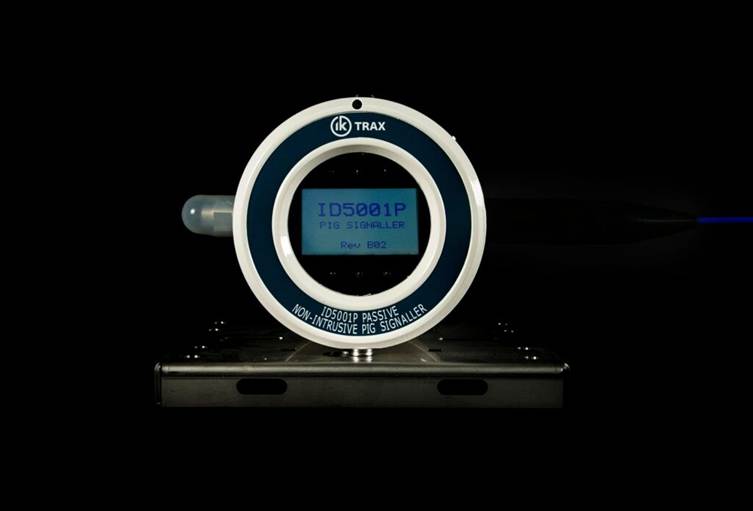
Acoustic pig signallers detect the characteristic sound signature produced as a pig moves through the pipeline. This method does not rely on magnets or additional equipment, making it practical where pig modification is not desirable or possible. Acoustic signallers are especially effective when pigs generate a strong, distinct noise profile, such as solid polyurethane or bi-directional pigs.
Strengths
- No pig modification required – works without magnets or transmitters
- Useful in non-liquid pipelines and situations where magnetic is not a practical solution
Considerations
- Due to different types of pigs producing different levels of noise, the system often needs to be calibrated for the individual pig to ensure reliable detection
- Background pipeline noise (valves, vibration) may cause false positives
- Quieter pigs may not produce a detectable sound profile
- Not always ideal in locations with heavy mechanical interference
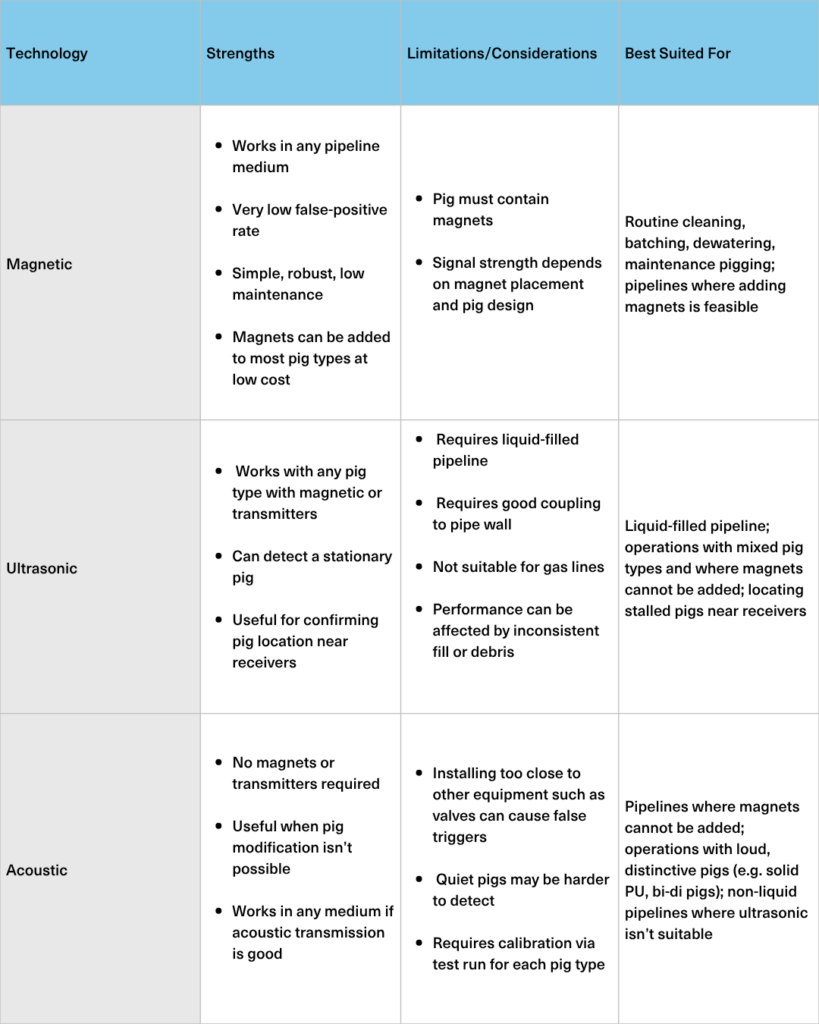
Summary of Non‑Intrusive Pig Signaller Types:
Standardisation vs Real-World Conditions
In many projects – especially larger CAPEX developments – there is a preference to standardise equipment across assets or entire facilities. While this approach can simplify procurement, it doesn’t always reflect the reality of how different pipelines operate.
Pig signaller performance is influenced by factors such as:
- Pig type
- Pipeline medium
- The level of background noise or vibration
- Whether the pig can carry magnets
Because these conditions vary from line to line, one technology may perform perfectly in one location but struggle in another. Relying on a single “default” signaller type can therefore lead to missed detection or reduced reliability in situations it wasn’t designed for.
A better approach is to treat standardisation as a starting point – and then adjust the chosen technology where real-world conditions justify it. This ensures each pipeline gets a pig signaller suited to its actual operating environment, pigging practices and detection needs.
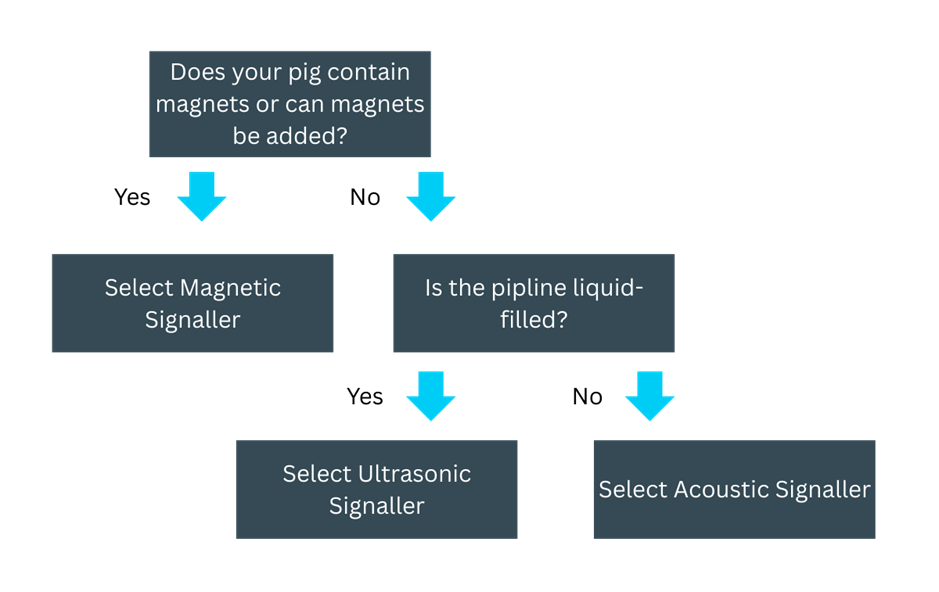
The below flow chart can be used to determine the most suitable signaller type for your application. For further guidance, please contact the IK Trax team.
Conclusion
Choosing the right pig signaller depends on the pig type, the pipeline medium and the operational environment. Each technology has its strengths, but real-world conditions often determine which option will provide the most reliable performance. Reviewing these factors early in the planning stage helps ensure the signaller selected is truly suited to the line.
For a broader overview of non-intrusive signallers, including safety considerations and communication options see our Complete Guide to Non-Intrusive Pig Signallers (2026.)