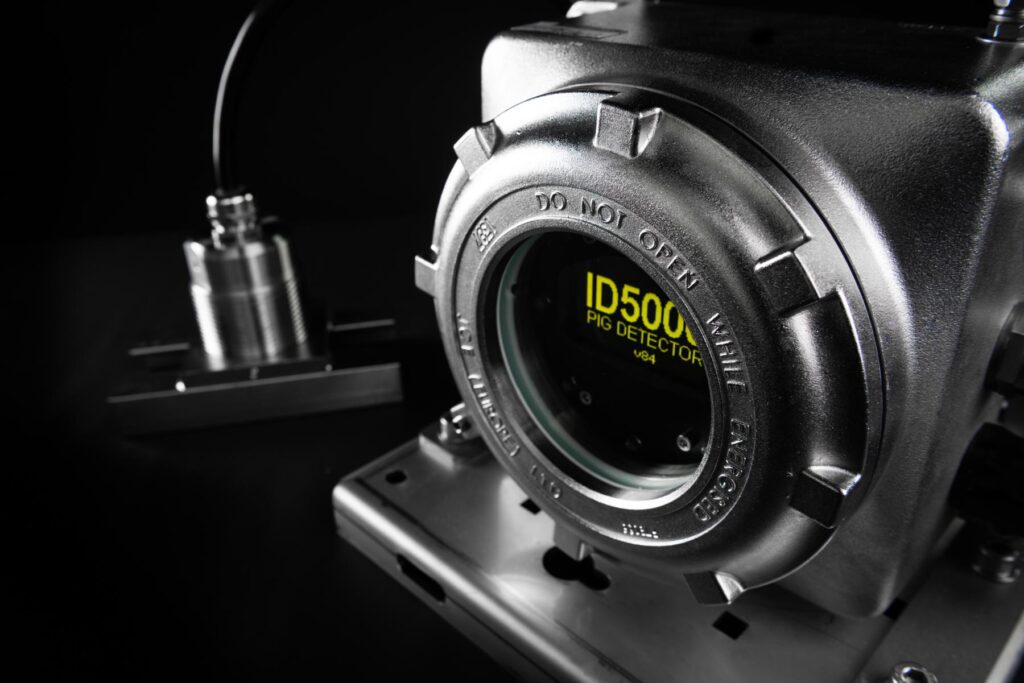
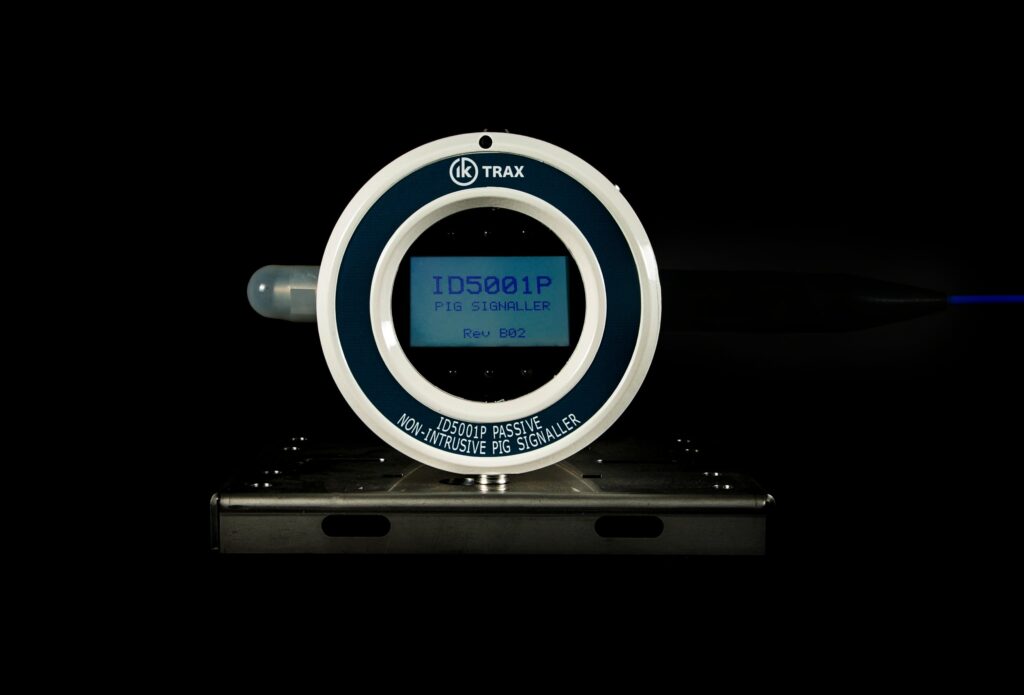
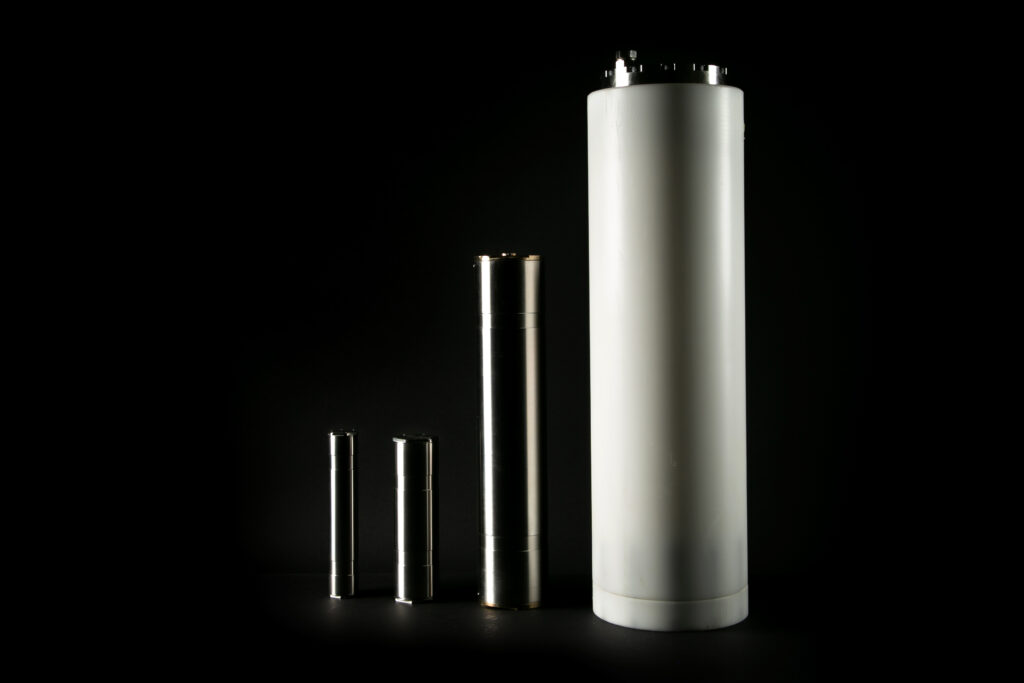
In pipeline operations, selecting the right pig signaller is essential for safe, efficient and reliable pigging. While datasheets outline technical specifications, real-world conditions often demand a more nuanced approach. Over-standardising or selecting technology solely on an outdated specification can result in poor performance, missed detections, or unnecessary operational risk.
This Buyer’s Guide breaks down the three primary pig signaller technologies – magnetic, ultrasonic and acoustic – and explains how each performs in practice, helping you identify the most suitable solution for your pipeline.
Understanding the Three Main Technologies
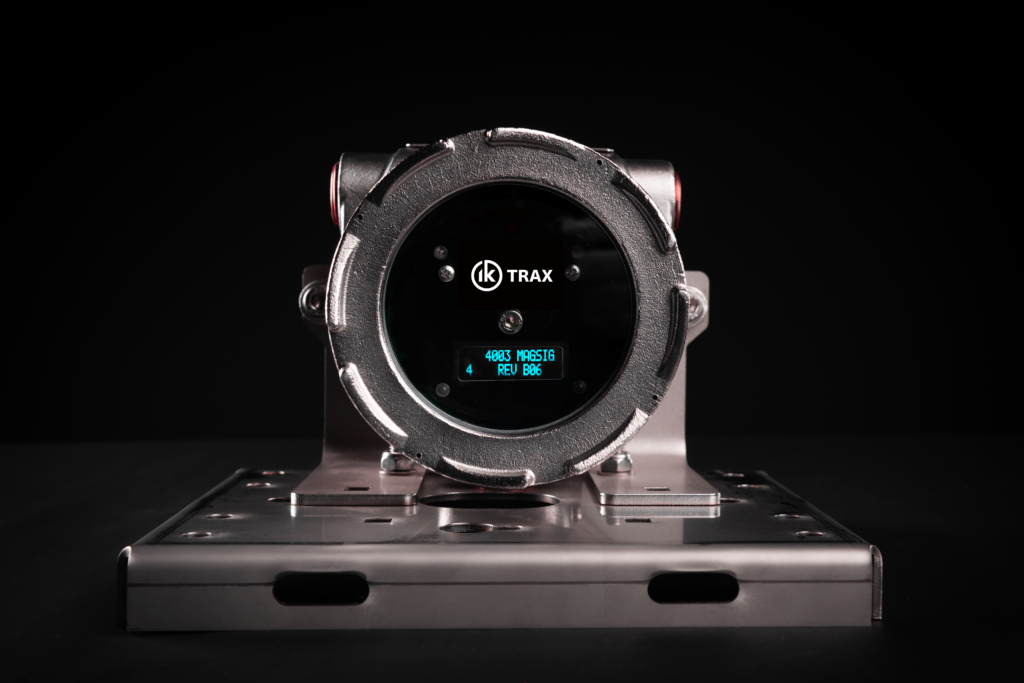
Magnetic Pig Signallers – Reliable, Targeted Detection Across Multiple Pig Types
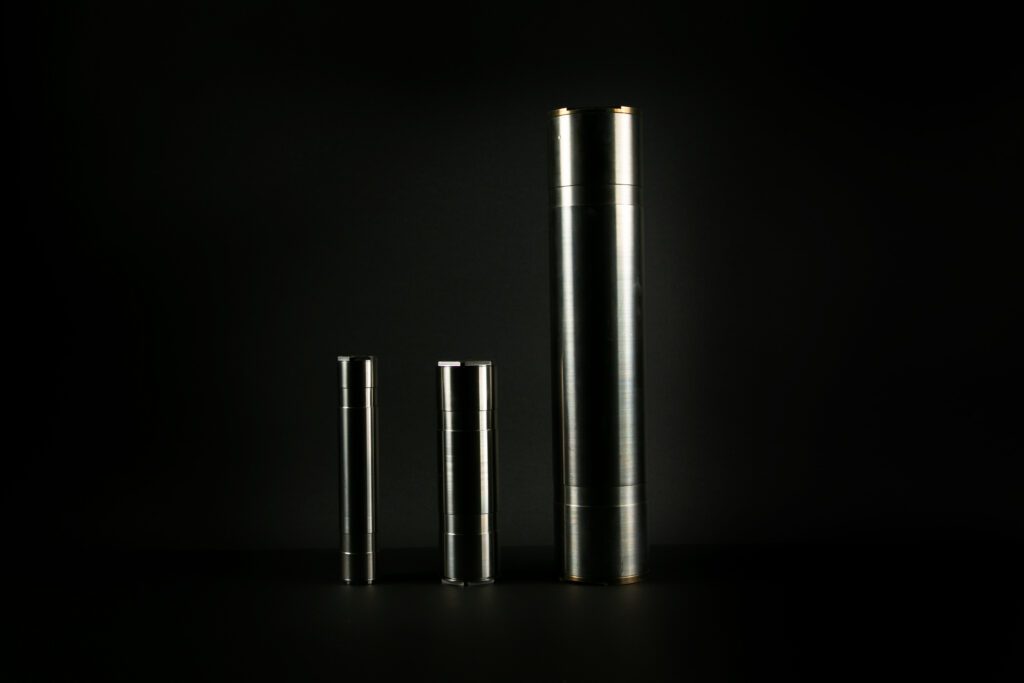
Magnetic pig signallers detect changes in magnetic field as a pig carrying magnets passes the sensor. Because magnets can be installed onto most pig types, magnetic detection is one of the most flexible and widely applicable technologies available.
This approach is straightforward, highly dependable and offers a clear, unambiguous trigger signal that is not influenced by pipeline noise or vibration. The cost of adding magnets is comparatively low, making magnetic detection easy to adopt in most operations.
Strengths
Works with a wide variety of pig types once fitted with magnets (foam pigs, polyurethane pigs, spheres, bi-directional pigs etc)
Low false-positive rate, thanks to detection based on magnetic field rather than acoustic or vibration signatures.
Simple, robust and low-maintenance, with excellent on-site reliability.
Suitable for both liquid and gas pipelines, making it a versatile choice across many operating environments.
Cost-effectivefor routine cleaning, batching, dewatering and general maintenance pigging.
Considerations
Magnets must be fitted to the pig – either during manufacture or retrofitted later.
Ultrasonic Pig Signallers – Versatile Detection in Liquid-Filled Pipelines
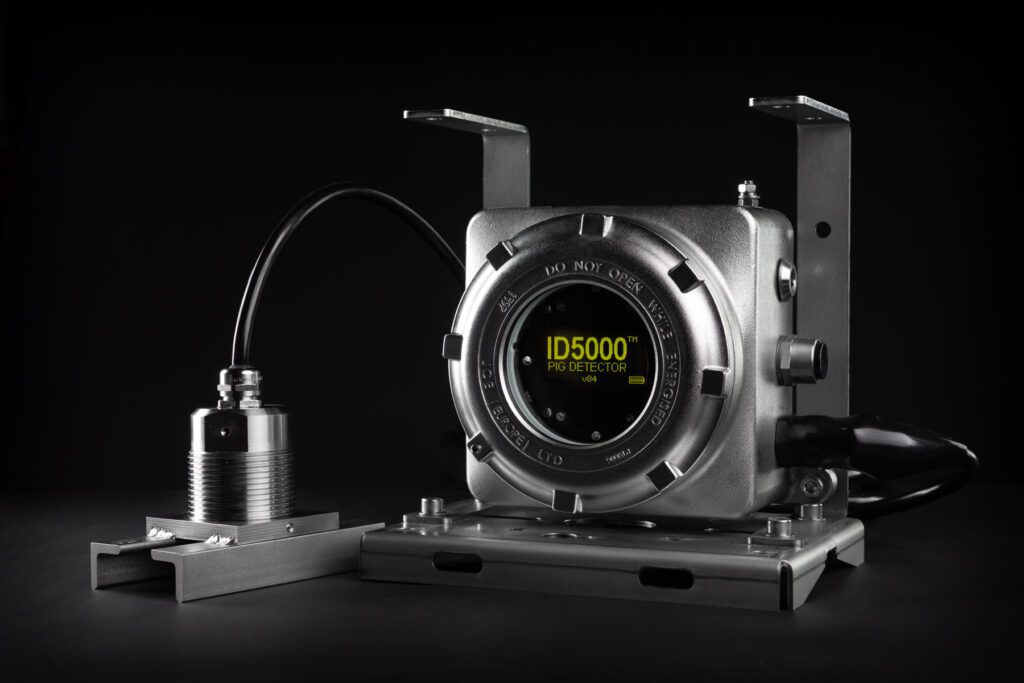
Ultrasonic pig signallers required a liquid-filled pipeline to operate effectively. They work by transmitting pulses through the pipe wall and detecting changes when a pig interrupts the signal path. They can detect any pig type, making them a strong choice for systems that use a variety of cleaning or speciality tools.
Strengths
Suitable for all pig types in liquid systems.
Highly versatile.
Can assist with identifying or confirming the location of stationary pigs.
Effective in operations requiring adaptable detection using a variety of pig types.
Considerations
Only effective in liquid-filled pipelines; not suited for gas systems.
Requires correct installation and good coupling to ensure accurate detection.
Performance can vary if the line has inconsistent liquid fill or large debris.
May require more precise setup than magnetic systems.
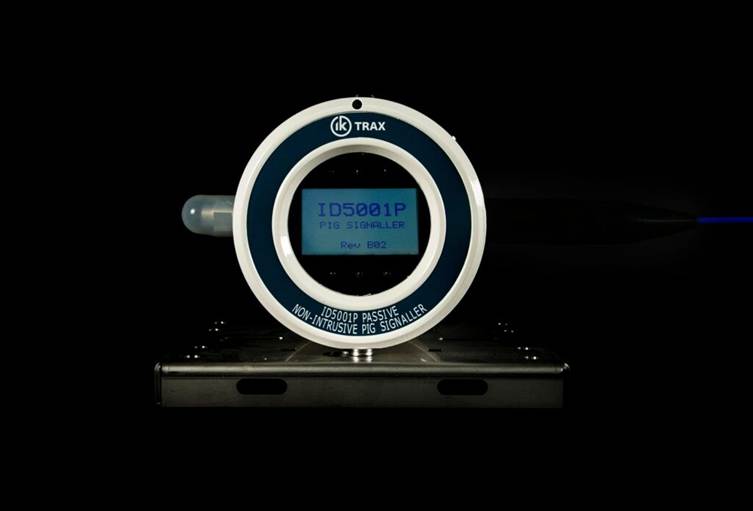
Acoustic Pig Signallers – Flexible Detection Based on Pig-Generated Noise
Acoustic pig signallers detect the characteristic sound signature produced as a pig moves through the pipeline. This method does not rely on magnets or additional equipment, making it practical where pig modification is not desirable or possible. Acoustic signallers are especially effective when pigs generate a strong, distinct noise profile, such as solid polyurethane or bi-directional pigs.
Strengths
No pig modification required – works without magnets or transmitters
Useful in non-liquid pipelines and situations where magnetic is not a practical solution
Considerations
Due to different types of pigs producing different levels of noise, the system often needs to be calibrated for the individual pig to ensure reliable detection
Background pipeline noise (valves, vibration) may cause false positives
Quieter pigs may not produce a detectable sound profile
Not always ideal in locations with heavy mechanical interference
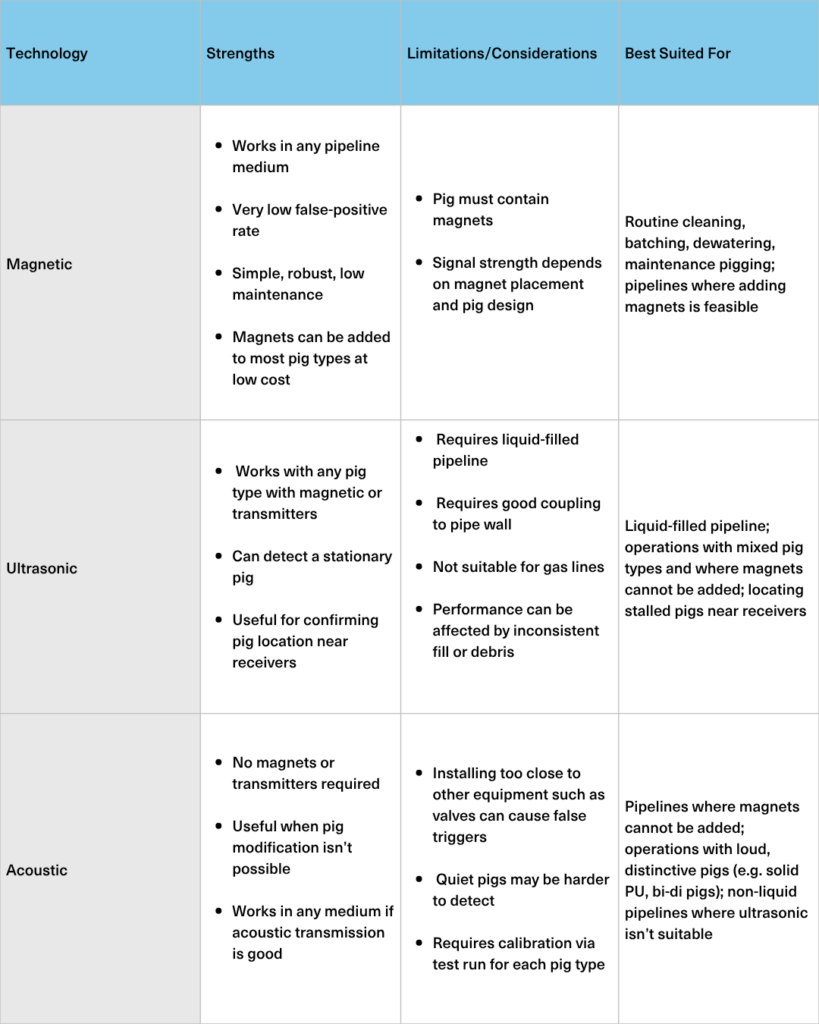
Summary of Non‑Intrusive Pig Signaller Types:
Standardisation vs Real-World Conditions
In many projects – especially larger CAPEX developments – there is a preference to standardise equipment across assets or entire facilities. While this approach can simplify procurement, it doesn’t always reflect the reality of how different pipelines operate.
Pig signaller performance is influenced by factors such as:
Pig type
Pipeline medium
The level of background noise or vibration
Whether the pig can carry magnets
Because these conditions vary from line to line, one technology may perform perfectly in one location but struggle in another. Relying on a single “default” signaller type can therefore lead to missed detection or reduced reliability in situations it wasn’t designed for.
A better approach is to treat standardisation as a starting point – and then adjust the chosen technology where real-world conditions justify it. This ensures each pipeline gets a pig signaller suited to its actual operating environment, pigging practices and detection needs.
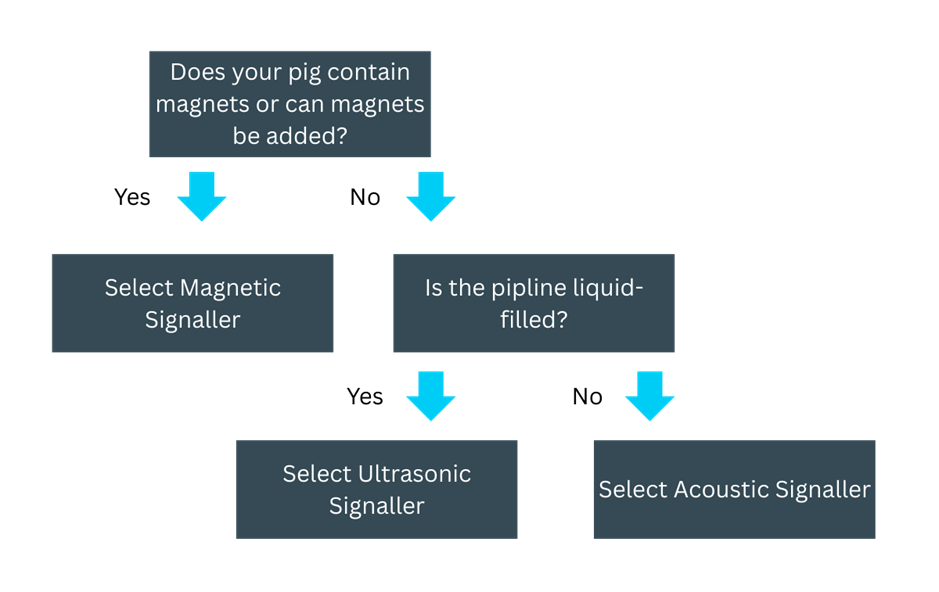
The below flow chart can be used to determine the most suitable signaller type for your application. For further guidance, please contact the IK Trax team.
Conclusion
Choosing the right pig signaller depends on the pig type, the pipeline medium and the operational environment. Each technology has its strengths, but real-world conditions often determine which option will provide the most reliable performance. Reviewing these factors early in the planning stage helps ensure the signaller selected is truly suited to the line.
Electromagnetic pig tracking offers a range of practical advantages that help improve the efficiency and reliability of pipeline operations. By detecting a transmitter fitted to the pig, operators can confirm its position at key points along the line or pinpoint the location of a stationary pig when required. This article outlines six key benefits of EM pig tracking a explains how the technology supports smoother, more predictable and more controlled pigging activities.
1. Accurate Locating
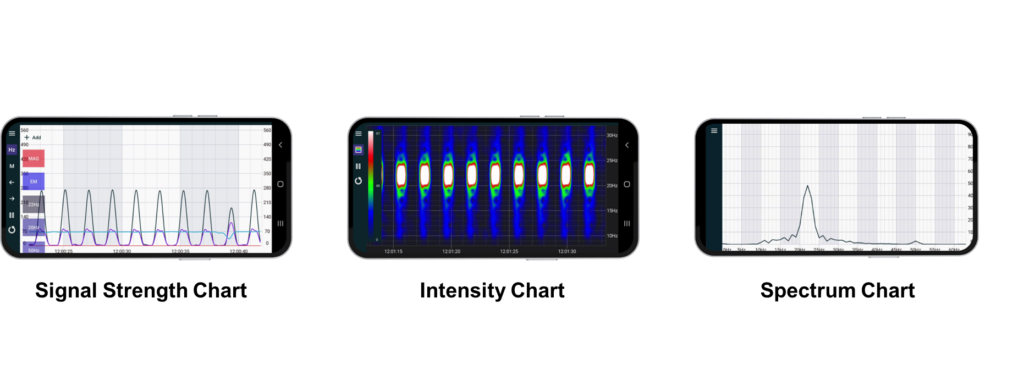
One of the core advantages of electromagnetic pig tracking is its accuracy. EM receivers allow operators to identify the transmitter’s null spot, confirming the pig’s position to within a few centimetres. Modern receivers and apps also provide visual confirmation through live signal strength and spectrum views, helping operators clearly interpret the pig’s location with confidence at any stage of the operation.
2. Operational Efficiency
Knowing the pig’s exact location throughout the run improves overall operational efficiency. Whether confirming successful launch and receipt or verifying progress at planned checkpoints, EM tracking removes uncertainty and enables other activities to continue without delay. This is especially valuable during subsea campaigns, where vessel time is limited and any pause in operations can have significant cost implications.
Modern EM systems also support efficient “leapfrog” tracking, allowing operators to move quickly between detection points while maintaining awareness of the pig’s progress. Apps and receiver visualisation tools provide real-time signal information, helping teams confirm that the system is functioning correctly and that the pig is where it is expected to be. This reduces unnecessary waiting, improves workflow coordination and supports smooth, more predictable pigging operations.
3. Reduced Operational Downtime
If a pig stalls during the operation, being able to locate it quickly is critical. EM tracking allows operators to narrow the search area quickly and focus directly on the confirmed position, rather than checking long sections of pipeline. This helps reduce the duration of unplanned downtime and limits the operational and financial impact of delays – particularly in subsea or remote environments where vessel time and access constraints can significantly increase costs.
Accurate locating also supports efficient planning of recovery activities, helping teams respond in a controlled and timely manner and reducing the uncertainty that can otherwise slow operations.
To read how IK Trax equipment has been used to locate stuck pigs, click here.
4. Enhanced Confidence
EM pig tracking provides operators with clear confirmation that the pig is exactly where it is expected to be. This assurance is valuable throughout the operation – not only when locating a stalled pig, but also when verifying that the pig has passed key points such as valves, tees or receivers. Accurate, real-time detection removes uncertainty and gives operators confidence to progress with the next steps, knowing the pig has safely cleared the required section of pipeline.
5. Cost Savings
While the initial investment in an EM pig tracking system may be higher than older or less capable alternatives, the long-term operational savings can be significant. Accurate, reliable locating helps minimise downtime, reduce vessel or crew time during offshore operations and avoid delays caused by uncertainty. Modern apps and visualisation tools also streamline setup, verification and troubleshooting also streamline setup, verification and troubleshooting, reducing the likelihood of repeat runs or extended field time.
These factors combine to deliver a more efficient overall workflow and lower lifetime operating costs, making EM pig tracking a cost-effective choice for both routine and complex pigging operations.
6. Adaptability
EM pig tracking systems are highly versatile and perform reliably across a wide range of operating environments. They can be used onshore, topside or subsea, in pipelines carrying either liquid or gas, and in more complex configurations such as trenched lines and pipe-in-pipe systems. Modern multi-frequency receivers and transmitter configuration options also make it easier to tailor the setup to suit different pig types and operational requirements.
This adaptability means the same equipment can be used across multiple projects, reducing the need for specialised tools and providing a consistent tracking method regardless of pipeline conditions.
Conclusion
Electromagnetic (EM) pig tracking provides a reliable and effective way to monitor pig movement and confirm location throughout an operation. Its accuracy, adaptability and ability to support clear decision-making make it a valuable tool for both routine and complex pigging campaigns.
Non-intrusive pig signallers detect the passage of a pig using sensors mounted on the outside of the pipeline. Unlike intrusive models, they do not penetrate the pipe wall or rely on the mechanical triggers. This article explains the operating principles behind the main non-intrusive detection technologies – magnetic, ultrasonic and acoustic – and outlines how each method identifies a pig as it passes key points along a pipeline.
What Is A Pig Signaller?
A pig signaller, sometimes called a pig detector, is a device used to confirm that a pig has passed a specific point on a pipeline. While “signallers” and “detector” are often used interchangeably, both terms describe equipment designed to identify a pig’s movement and indicates its passage. Signallers are commonly installed at launchers, receivers and critical points along the pipeline to support safe and efficient pigging operations. When a pig is known to have passed one signaller but not the next, the search area can be narrowed quickly before tracking equipment is deployed.
There are two types of pig signallers:
Intrusive – use a mechanical trigger inside the pipeline
Non-intrusive – use external sensing technologies to detect the pig without intruding into the pipe.
This article focuses exclusively on how non-intrusive signallers work.
Technology Overview
Before diving into the many smart features and benefits of non-intrusive signallers, we will outline the different technologies available and their application.
Magnetic
Magnetic pig signallers are not a new technology but they have evolved to become more reliable, configurable and easier to use. The work across any pipeline medium – the only requirement is that the pig carries magnetics.
Magnetic Sensor: A magnetic sensor – either integrated into the unit or supplied on a cale for buried lines or limited-access locations – monitors the change in magnetic field strength as the pig approaches. When the field reaches a pre-set threshold, the signaller registers “Approach.”
Pig Detection: As the pig passes the signaller and continues along the pipeline, the magnetic field drops. This change is used to confirm “Pig Passage.”
Detection Alert: Once passage is detected, the signaller activates an alert. This may be a local visual indication (e.g LEDs), and/or a remote signal to a control room or handheld device. The event is also logged with date and time for later review.
Reset and Readiness: After signalling, the unit resets automatically after a pre-determined interval so it is ready for the next pig. If preferred, it can also be reset manually via the push button or from the control system.
The sensitivity to magnetic field changes deliver clear, timely indications which is why magnetic signallers remain a preferred choice for many operators. As an additional note, the cost of adding magnets to a pig is comparatively low, so where pig design allows, magnetising the pig is generally recommend to enable this simple and robust detection method to be used.
Ultrasonic
Ultrasonic pig signallers offer a sophisticated approach to pig detection and have the added advantage of being able to detect the position of a stationary pig, not just the passage of a moving one. They also do not require magnets or transmitters on the pig to operate.
Ultrasonic Pulse Emission: The signaller is equipped with an ultrasonic transducer, supplied on a cable, and uses the pulse-echo method to monitor the time of flight of ultrasonic pulses through the pipe. When the unit is first switched on, it establishes a baseline internal diameter for the pipeline from the returned signal. Provided the line is liquid-filled, the device can “see” a stable reaction from the opposite side of the pipe.
Interruption and Detection: When a pig passes the sensor location, it disturbs the flow path and breaks the beam. This interruption changes the apparent diameter reading relative to the baseline the unit established at start-up. The device processes this change to confirm pig passage.
Filtering: The detection algorithm can be calibrated to filter out smaller disturbances – such as debris – ensuring that only meaningful changes in the ultrasonic path trigger a pig-passage event.
Detection Alert: As with the magnetic pig signallers, ultrasonic signallers have the capability to locally or remotely signal pig passage and log pig passage data
Ultrasonic Locating: As pigs approach receivers, they can lose momentum and stall after the main line tee but before the isolation valve. To determine the location of the pig, the operator moves the ultrasonic sensor incrementally along the pipe and monitors the live diameter reading: where the pig occupies the bore, the measured diameter deviates from the baseline; where the bore is clear, the reading returns to baseline. In this way, the operator can map sections of the pig (e.g cups/discs vs gaps) and pinpoint the exact stall position, avoiding unnecessary delays.
Acoustic
Acoustic pig signallers operate on the principle of sound detection and can be used in any pipeline medium without the need for magnets or transmitters. Here is a breakdown of how they function:
Sound Detection: Acoustic Pig Signallers monitor the vibrational and acoustic noise generated as a pig moves through the pipeline. Each pig produces a characteristic acoustic signature and the device listens for these changes at the sensor location.
Filtering and Processing: To avoid false alarms, the detection algorithm filters out background noise and focuses on the sound associated with pig movement. Correct placement is important – these units should not be installed close to valves, pumps or other features that may create similar noise profiles to a passing pig. A short test run is required during installation to calibrate the unit to the specific pig type and to confirm the chosen location provides clear, reliable detection.
Alert Activation: Once the device identifies the sound of a pig approaching, it will signal “Pig Approach.” Once the pig passes the detector and the sound level drops below the threshold, it will signal “Pig Passage.” This indication can be viewed locally or remotely.
System Reset: After a successful detection and alert, the signaller resets to its default state so it is ready for the next detection.
Magnetic, ultrasonic and acoustic signallers work by detecting distinct physical effects at the pipe wall. Knowing how each method generate and validates an indication helps operators install, calibrate and interpret results correctly.
Although the terms pig tracking and pig locating have distinct meanings, they are often used interchangeably. In many cases, pig tracking is used as a catch‑all term to describe both monitoring a pig’s movement and identifying the position of a stationary pig. For the purposes of this article, we will use pig tracking to refer to both activities.
Why Pig Tracking Matters
Pig tracking (sometimes referred to pig locating) is a key operational requirement during any pigging job. It involves monitoring the movement of a pig along the pipeline or confirming the location of a stationary pig. In many cases, tracking is simply used to verify that a pig has reached the expected location, such as the receiver. In other situations, it may be needed to help locate a pig that has stalled on its way through the line. Knowing exactly where the pig is at each stage is vital. Confirming arrival in the receiver removes uncertainty and avoids unnecessary delays, while identifying the location of a stalled pig becomes critical to prevent further disruption to the operation.
This urgency is even greater during subsea pigging campaigns, where vessel costs are high and delays can quickly affect project budgets. Stalled pigs in subsea environments can lead to extended vessel time and operational downtime, making rapid and reliable tracking essential.
Pig tracking systems typically consist of two key elements:
A device attached to the pig such as an electromagnetic transmitter
A device outside the pipeline – often a handheld receiver – used to detect the signal
Pig tracking as a concept is straightforward – detect a signal generated by a device mounted on the pig such as a transmitter – but industry expectations have changed significantly. Operators now expect a higher level of reliability, accuracy and real-time visibility and there is increasing focus on using technology to improve assurance and reduce the time spent searching for a pig’s location. As a result, modern tracking systems are designed not only to detect pig passage but to provide better data, improved flexibility and clearer insight throughout the operation.
Overview of Pig Tracking Methods
There are several types of pig tracking systems used across the industry. Each relies on a different method of detecting a signal from the pig, and each comes with its own set of benefits and limitations.
Acoustic Tracking
Acoustic pig tracking has been used for many years and was traditionally the go-to option for subsea pigging projects. An acoustic pinger is mounted on the pig, and the signal is detected using a diver-held or ROV-mounted hydrophone and receiver. Acoustic technology is effective for detecting a signal over long distances, but it is not designed for pinpoint accuracy. It is also limited to subsea, liquid-filled pipelines that are not buried, which makes it far less flexible for wider pipeline operations.
Radioactive Isotope (RAI) Tracking
RAI tracking involves attaching a small radioactive source to the pig and using an external gamma receiver to monitor its progress. RAI is highly accurate and removes any concern over battery life. However, it is heavily regulated, requires specialist handling and trained operators and can be difficult and expensive to ship. These logistical challenges often limit its practical use despite its technical effectiveness.
Electromagnetic (EM) Tracking
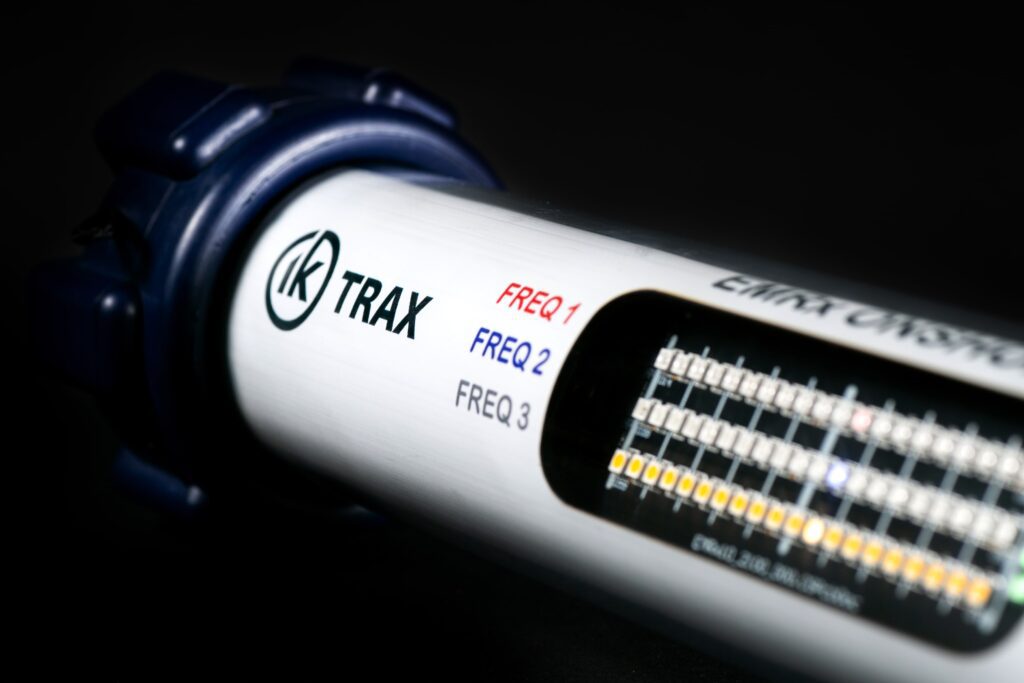
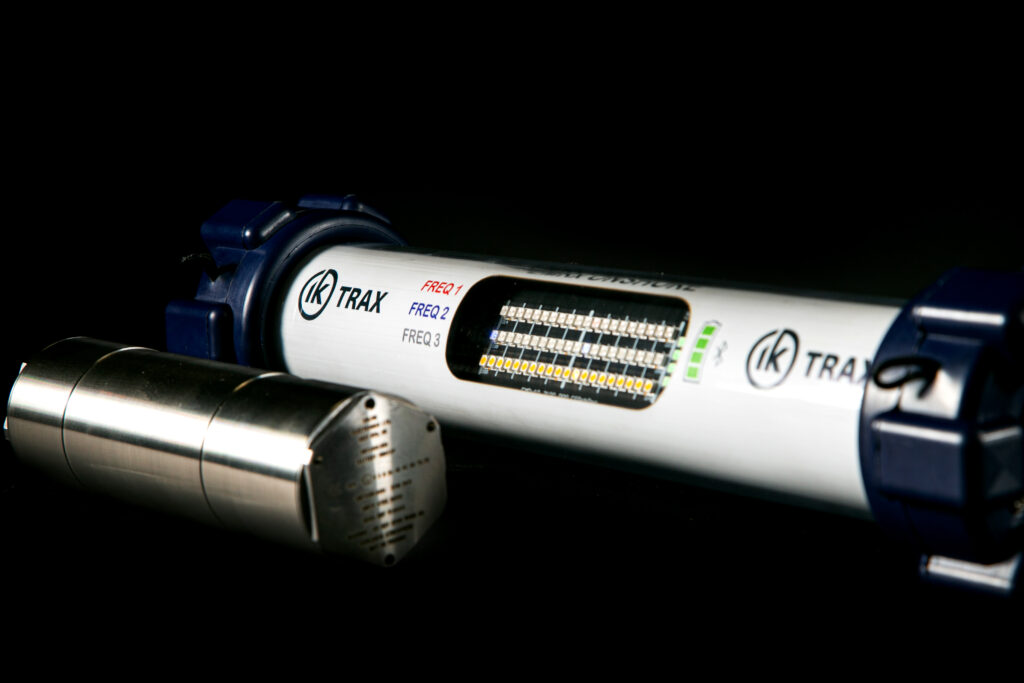
Electromagnetic pig tracking is the most versatile of the available options. It can be used onshore, offshore and subsea, with any pipeline medium, and even when the pipeline is buried or trenched. An EM transmitter inside the pig generates a signal that can be detected externally using a handheld receiver or an above-ground device. With IK Trax’s EMRx Receiver, the signal is typically represented by LED bar graphs which display received signals at any three frequencies between 10Hz and 30Hz. EM tracking can locate a pig to within centimetres, making it a highly accurate option for both routine passage confirmation and the rapid location of a stalled pig. Many EM receivers can also detect magnetic signatures, adding further flexibility when pigs are fitted with magnets.
Electromagnetic Pig Tracking and Real-World Considerations
Electromagnetic (EM) pig tracking has become the industry’s preferred solution for good reason. It is the most versatile tracking method available, suitable for onshore, offshore and subsea pipelines, regardless of whether the line carries gas or liquid. EM systems are straightforward to operate, highly accurate and supported by a wide range of transmitter and receiver models. The technology allows operators to locate a pig to within centimetres and provides the confidence that if required, the pig can be found quickly and efficiently. For most operators, EM tracking acts a practical form of insurance; if something unexpected happens, the tools are in place to respond.
Another advantage is the safety profile. EM transmitters typically use alkaline cells and many models are available with hazardous-area certification, making them suitable for a broad range of operating environments. Combined with modern configuration apps and clear, digital receiver displays, EM tracking offers a level of reliability and ease of use that other tracking methods cannot match. It also supports a wide range of operational scenarios, from simple passage confirmation to the swift locating of stalled pigs.
Although EM tracking is straightforward to deploy, there are still operational factors to consider to ensure optimal performance. These challenges usually relate to the pipeline itself and the environment in which the equipment is used. With buried pipelines, the distance between the transmitter and the receiver naturally increases, which can reduce the signal detected at the surface. It’s not just the depth that matters – the make-up of the ground (e.g local substrate and how well it transmits or attenuates the signal) can further affect detection performance. Pipeline wall thickness can have a similar effect. The thicker the wall, the more material the EM field must pass through. In all of these cases, you can adjust receiver sensitivity and/or transmitter output or frequency but there are trade-offs; higher gain can introduce more background noise and higher transmit power reduces battery life. Finding the correct balance between these settings is therefore essential.
Pig design is another important consideration. EM transmitters may experience reduced signal strength or decreased battery life when surrounded by certain materials. For example, a 315 stainless steel pig body generally provides good performance, whereas carbon steel can cause significant attenuation. Correct placement of the transmitter within the pig also contributes to reliable detection.
To address these factors, the recommended approach is to carry out representative testing ahead of the pigging operation whenever possible but especially when there are known factors which could affect the equipment performance. Testing confirms the capabilities of the selected equipment in real-world conditions and helps identify the most suitable configuration. IK Trax can support this process by working with clients to assess transmitter performance, review settings and ensure that the tracking setup is optimised before operations begin.
Electromagnetic System Capabilities
Modern EM pig tracking systems offer a range of capabilities that make them flexible and easy to use across different pipeline environments. Much of this flexibility comes from the use of configuration and visualisation Apps, which allow operators to adjust settings in the field and understand the signal behaviour in real time.
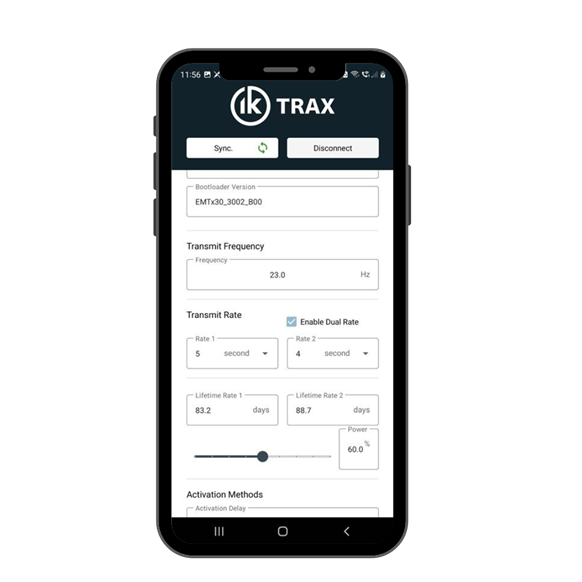
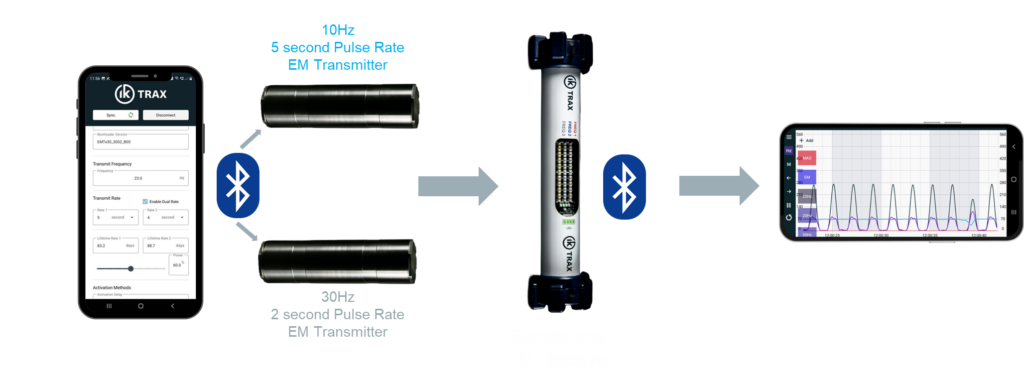
EM transmitters can be programmed using an app – such as the IK Trax EMTx Config App – to suit the requirements of this operation. Parameters including transmit frequency, pulse rate, power level and switch-on delay can all be adjusted quickly on site without returning the unit to the manufacturer. This provides operators with a high degree of flexibility and makes it easy to tailor the transmitter to achieve the right balance between detection range and battery life for the specific project.
On the receiver side, multi-frequency detection is now a common feature. This allows a receiver to detect more than one transmitter at the same time, provided they are configured at different frequencies. This is especially useful when dealing with a pig train or when multiple pigs are being tracked in close succession.
Apps such as the IK Trax EMRx App provide an additional layer of insight into how the signal is behaving. Operators can view live signal strength across up to six colour-coded electromagnetic signals, helping them understand the quality of the received signal at a glance. The app also shows the frequency and pulse rate of one or more signals simultaneously and provides a spectrum view, which is helpful when troubleshooting or identifying noise sources outside the 10-30Hz range of interest.
In addition to visualization, the Receiver App allows operators to scroll through logged data, add markers to points of interest and export this information for reporting or review. It also makes receiver configuration more efficient. Settings such as tracked frequency or gain can be changed directly via the app, rather than using the receiver’s physical push-button interface, which is more time-consuming.
The combined effect of configurable transmitters, multi-frequency receivers and app-based visualisation is a system that is easy to optimise, provides clear insight during the operation and gives operators greater confidence throughout the pigging campaign.
Remote Pig Tracking with Above-Ground Markers
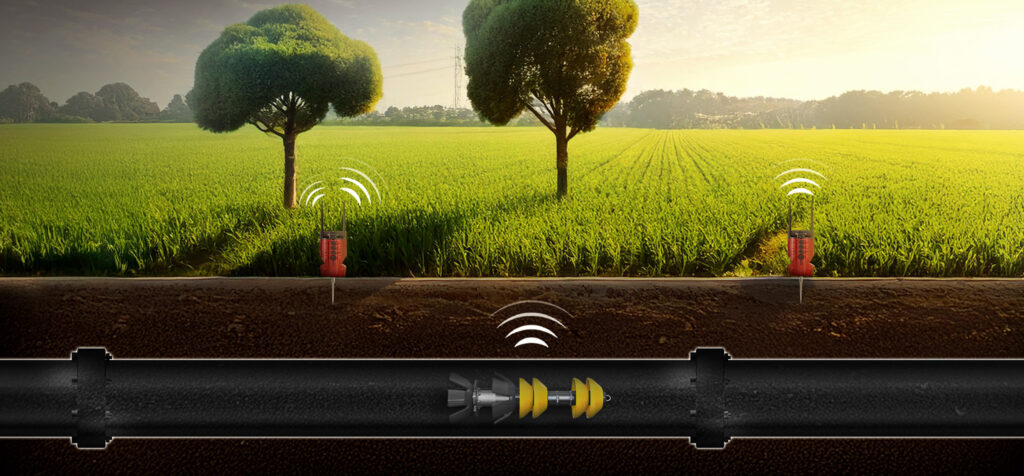
For certain operations, particularly those involving long distance, remote block valve stations or unmanned facilities, it is not always practical for an operator to track the pig with a handheld receiver. In these scenarios, an above-ground marker (AGM) provides an effective alternative. AGMs are positioned at key points above the pipeline and are designed to detect the pig as it passes, without requiring continuous operator presence.
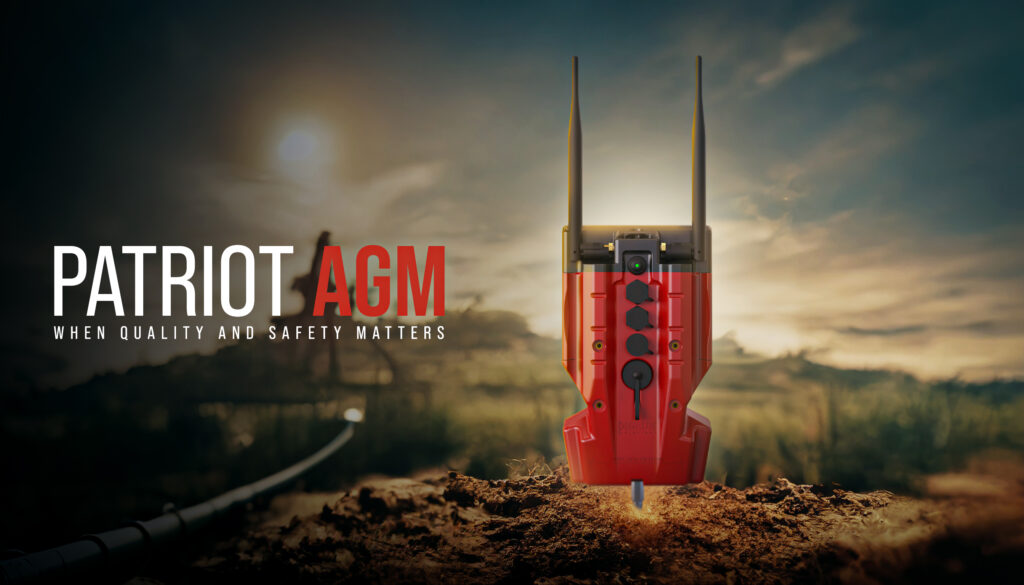
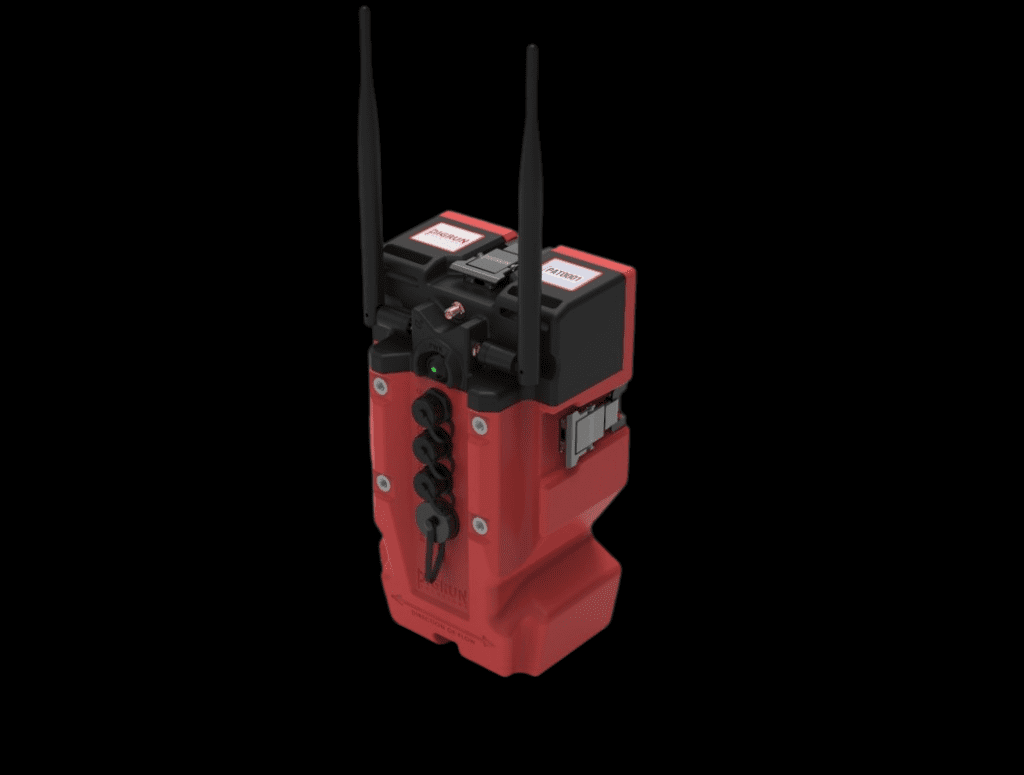
The Patriot AGM is an example of this type of system. It combines magnetic, electromagnetic and acoustic detection, allowing it to identify a wide range of pigs fitted with different tracking devices. This multi-technology approach improves confidence during pigging campaigns, particularly when the pig may be travelling through challenging environments.
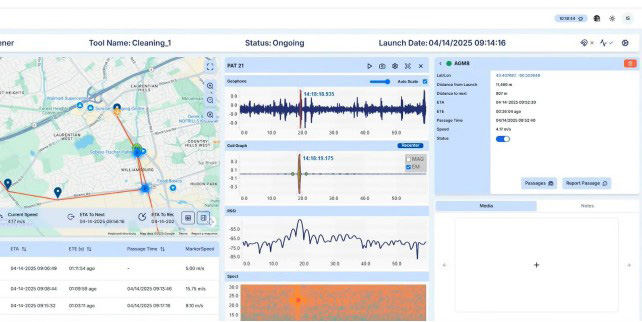
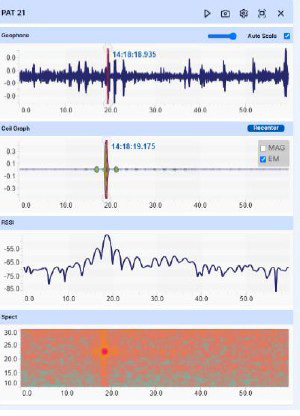
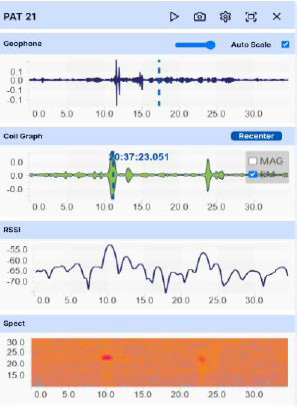
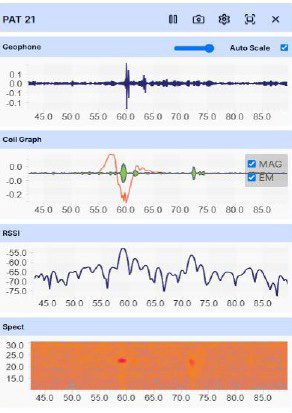
One of the main advantages of an autonomous system is the ability to communicate pig location information remotely. The Patriot AGM supports Bluetooth, cellular and satellite communication, making it suitable for pipelines that span remote terrain or areas where physical access is limited. Operators can view live pig passages, receive notifications and review historical events through the Pat Track software, which displays data such as maps, signal graphs and run history. This provides a clear and accessible view of the pig’s progress throughout the operation.
AGMs are particularly beneficial during multi-day pigging campaigns or when working on cross-country pipelines where sending personnel to monitor each location would be inefficient or impractical. They reduce the need for continuous field presence, improve situational awareness and provide reliable confirmation of pig passage at predefined points.
Choosing the Right Tracking Method
Choosing the most suitable tracking method depends on a few key factors: pipeline medium, pig type, access to the line and the level of visibility required throughout the operation. In most cases, electromagnetic tracking provides the most balanced and reliable option, combining accuracy, versatility and ease of use across almost any pipeline environment.
For longer-distance operations for pipelines located in remote or unmanned areas, remote systems such as the Patriot AGM offer an additional layer of visibility by confirming pig passage at fixed points without the need for continuous operator presence. When used alongside EM tracking, they provide a clear and consistent view of the pig’s progress throughout the run.
Other tracking technologies such as acoustic or radioactive isotope systems have their place in specific scenarios, but they are far less versatile and typically for more niche applications.
Reviewing the operational environment, pig design and monitoring requirements early in the planning stage will help ensure the most suitable tracking method is chosen. IK Trax can support this process and provide guidance on selecting the right solution for each project.
Our partner PigRun was invited to demonstrate the Patriot AGM remote tracking technology during a multi-day pigging operation on a 12 inch Enbridge gas pipeline in Kitchener, Ontario. The pipeline spanned approximately 24 kilometres and involved several cleaning runs over three days. The cleaning program included six pigs of varying types (foam, brush, magnetic) and one gauge plate, as part of a scheduled maintenance operation.
The Patriot’s Role Three cellular-enabled Patriot Above Ground Marker (AGM) units were deployed and one remote tracker was assigned to monitor the job. The units were pre-deployed prior to the run and moved strategically along the pipeline to cover approximately 20 marker locations.
Key Details: – Pig speeds were around 5m/s in the first half of the line and slowed to ~ 1 m/s in the second half – A combination of field deployment and remote tracking was utilised to minimise field presence and optimise coverage – All passes were successfully detected and reported in real time
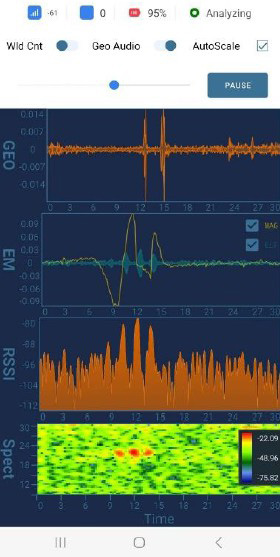
What Sets Patriot AGM Apart The Patriot AGM is a compact, all-in-one remote tracker designed to simplify fieldwork while maximising sensitivity and performance. Unlike traditional systems that require bulky equipment, Patriot AGM integrates: – Built-in sensors (electromagnetic and geophone) – Optional external sensor connections to enhance detection of quieter pigs and challenging EM signals – Bluetooth and cellular connectivity, enabling both local and remote control
Each Patriot AGM deployed during this operation was able to detect and report all pig passages reliably to the Pat Track Dashboard.
Real-Time Tracking with Pat Track Dashboard The Pat Track Dashboard enabled the remote tracker to: – Receive passage alerts within seconds – View live signals and stream real-time geophone audio – Track the pig’s progress without being physically present at each site
These capabilities significantly improved operational oversight and efficiency, making it easier to adapt to last-minute field changes and challenging terrain.
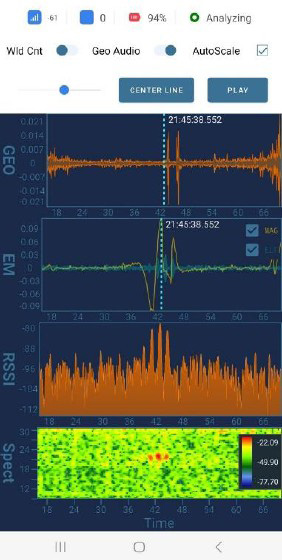
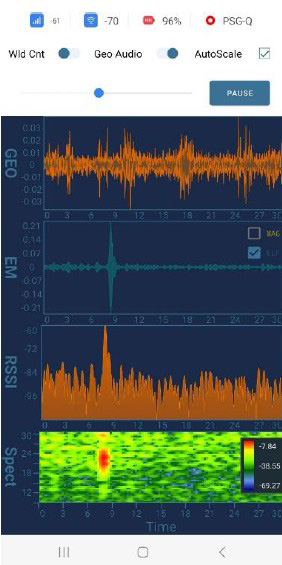
Powerful Mobile App Support The Android App, PATCONNECT, played a critical role in supporting local tracking. Key features include: – Long-range Bluetooth connectivity, often exceeding 100 metres in open environments – Live geophone audio streaming, accessible via wired headphones or wirelessly through the vehicle’s Bluetooth – Real-time waveform display, aiding quick signal interpretation – Automatic weld counting, reducing manual tracking effort and human error – This intuitive tool allows field technicians to operate more efficiently, with fewer distractions and less equipment.
Challenges and Lessons Learned – Some marker locations could not be reached due to road closures and construction. Full pre-deployment would have mitigated this – A fully pre-deployed setup could have allowed for faster pig launching and less field technician repositioning, improving efficiency, safety and cost-effectiveness
Conclusion Despite field access limitations, the Patriot AGM units and supporting systems successfully tracked all cleaning pigs and the gauge plate throughout the job. This demonstration validated: – The reliability and accuracy of Patriot AGM in real-world conditions – The effectiveness of remote tracking via the Pat Track Dashboard – The operational benefits of minimising field presence without sacrificing data quality
Click here to download the PDF version of this case study.
Reliable pig tracking and signalling in subsea environments require equipment that can withstand extreme conditions and perform consistently over time. This article explores some of the key challenges faced offshore and the technologies available to overcome them.
High Pressure Pipelines
Designing pig tracking and locating equipment that can withstand the high pressures found in offshore pipelines is a major challenge. Pressure ratings can reach up to 1000 bar, especially in deepwater fields and high-pressure transmission pipelines, and any equipment deployed must be able to survive this environment whilst still functioning.
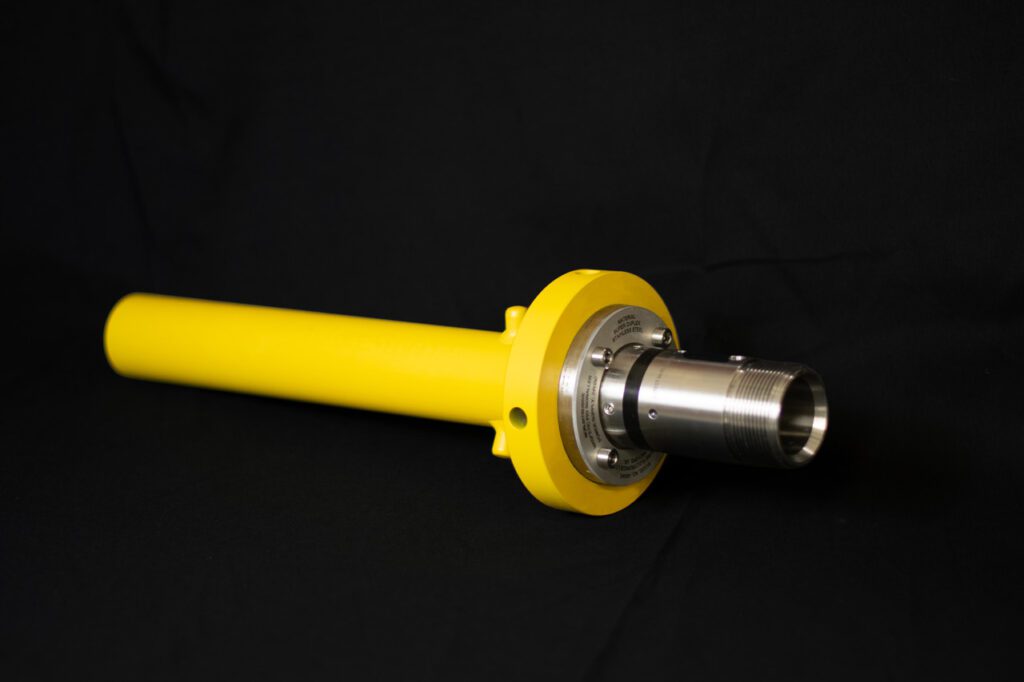
Transmitters must be robustly engineered to endure these conditions – high-quality, high-pressure materials such titanium protect internal electronics without compromising signal detection. Titanium not only provides excellent corrosion resistance but also ensures structural integrity at high pressures.
At extreme pressures, the potential for damage significantly increases. Housings and seals are subjected to high pressure and a leak can result in water ingress, failure and loss of signal. The consequences of such failure include uncertainty about pig location and costly retrieval operations or re-runs. Ensuring reliability at these pressures requires rigorous testing, high-spec materials and attention to every detail of the design and assembly process.
Loading Pigs in Advance and Battery Life Limitations
Electromagnetic transmitters are typically activated manually before being installed inside a pig, at which point the battery begins to deplete. In many cases, pigs are loaded inside the launcher well in advance – sometimes weeks, months or even years before launch. This prolonged period can significantly reduce the transmitter’s battery life, potentially leading to power loss before the pig is launched or before its arrival is confirmed.
To address this, delayed-start endcaps have been developed. Pressure-activated endcaps keep the transmitter powered off until it reaches a specified ambient subsea pressure, making them ideal for deepwater operations. Alternatively, wet-start endcaps activate only when the pig comes into contact with liquid, providing a solution where pigs are loaded dry but not flooded until shortly before launch.
Additionally, the IK Trax EMTx Config App includes a delayed switch-on time feature. This allows operators to schedule activation in advance, but it requires accurate planning and confirmed operational dates. Once the pig is deployed subsea, any preset timing cannot be adjusted.
For certain long-term deployments, even delayed-start options may not provide sufficient battery life. In these cases, where a magnetic source is present on the pig, a magnetic surveying system offers an effective alternative. These systems detect variations in the magnetic field, allowing the pig to be detected if an electromagnetic source is not present.
Interference from ROV Operations
Subsea pig tracking and signalling operations often rely on Remotely Operated Vehicles (ROVs) to install and monitor devices. However, ROV involvement introduces a unique challenge: the risk of false readings or signal interference. This interference can arise from either electromagnetic emissions or physical movement and instability caused by the ROV itself.
To minimise these risks, the receiver should ideally be placed directly on the pipeline to ensure a stable and consistent reading. Where feasible, diver operation can offer more precise control during deployment.
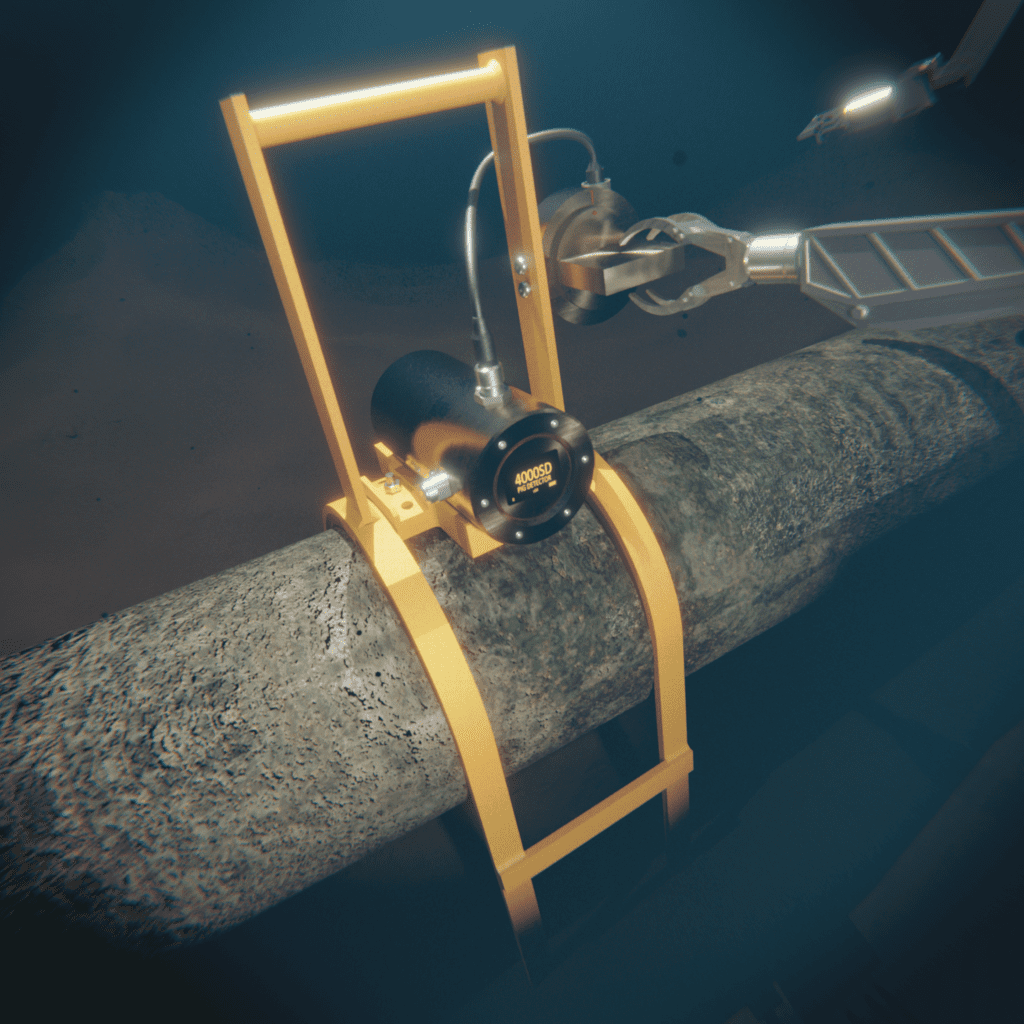
For pig signallers installed by ROV, false triggers can occur due to motion during deployment. To prevent this, a stabilization delay can be programmed into the device. This delay keeps the unit inactive during installation, only beginning to “listen” once the signaller is securely mounted and stable – eliminating the risk of false events caused by movement during deployment.
IK Trax 4000SD and ROV switch mounted on ROV-deployable cradle
Frequent Pigging Demands Permanent, Real-Time Signal Solutions
For subsea pipelines where pigging operations are performed frequently, relying on an ROV or diver to confirm pig passage for every run is often impractical. This creates the need for a more permanent, reliable solution that continuously detects pig passage and transmits signals back to the surface control room in real time.
IK Trax’s 4004S Permanent Subsea Pig Signaller
Temporary pig signallers typically fall short in such scenarios due to limited battery life and the unavailability of ROVs or divers for monitoring. In contrast, permanent magnetic pig signallers, like the IK Trax 4004S, offer a robust and long-lasting solution. The 4004S is designed for continuous subsea installation without requiring intrusive modifications to the pipeline. It provides consistent, real-time pig detection by sensing the change in magnetic field caused by the pig’s passage.
With its durable construction, designed for long-term installation and ability to transmit pig passage data, the 4004S allows operators to integrate pig passage signals seamlessly into their control and monitoring systems. This integration supports proactive maintenance planning, minimizes downtime and enhances operational efficiency in pipelines where frequent pigging is essential.
Conclusion
As offshore pigging operations become more complex and frequent, dependable tracking and signaller solutions have become an important part of efficient pipeline management. From pressure-rated equipment to real-time signalling systems, having the right tools in place helps ensure smoother operations, fewer delays and greater confidence in pigging performance.
To find out how our systems can support your next pigging campaign, get in touch with our team to explore our full range of tracking and signalling technologies.
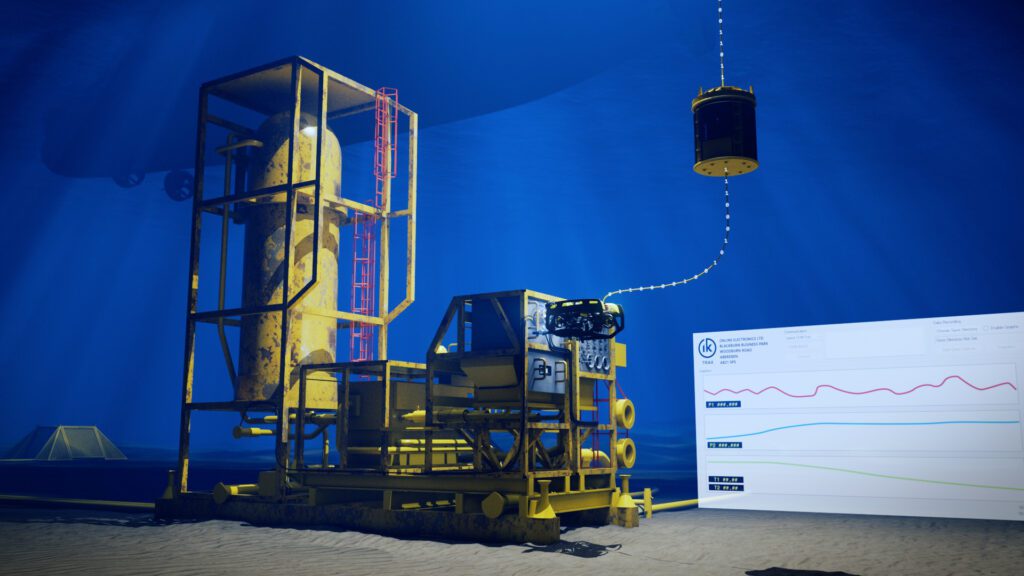
Loop is a versatile subsea data hub developed by IK Trax, designed to streamline and enhance the way subsea data is monitored and retrieved. With its advanced multi-sensor capabilities, Loop monitors a variety of subsea parameters and offers an innovative solution that addresses common challenges faced during subsea operations.
Key Features
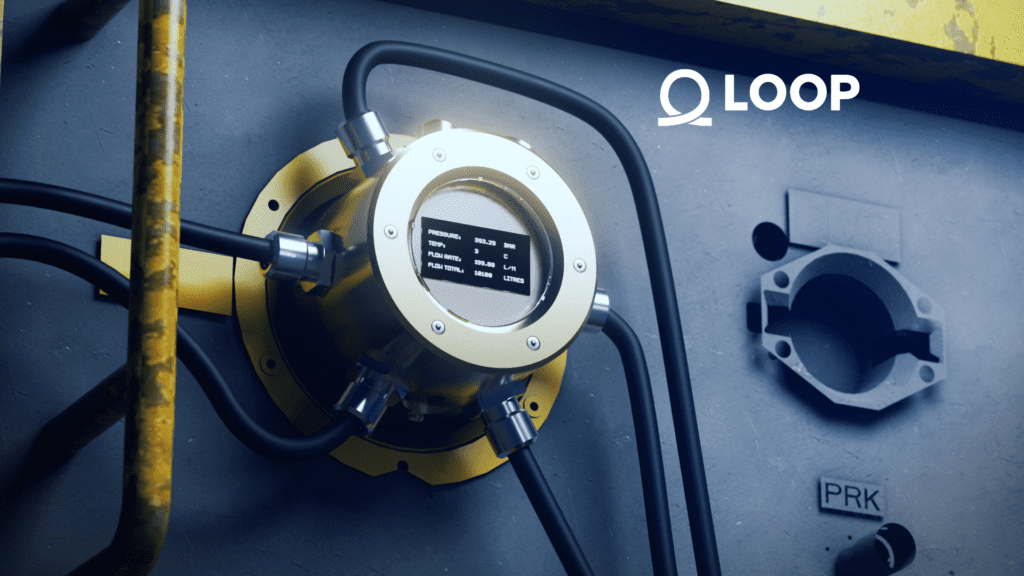
Loop has a number of key features that set it apart from other systems. It has the ability to connect and interface with different types of sensors. Typically, these are pressure and temperature sensors but it also has the capability to monitor flow. One of Loop’s key advantages is that it can log any sensor it can interface with. Future additions could include sensors for differential pressure, vibration and salinity.
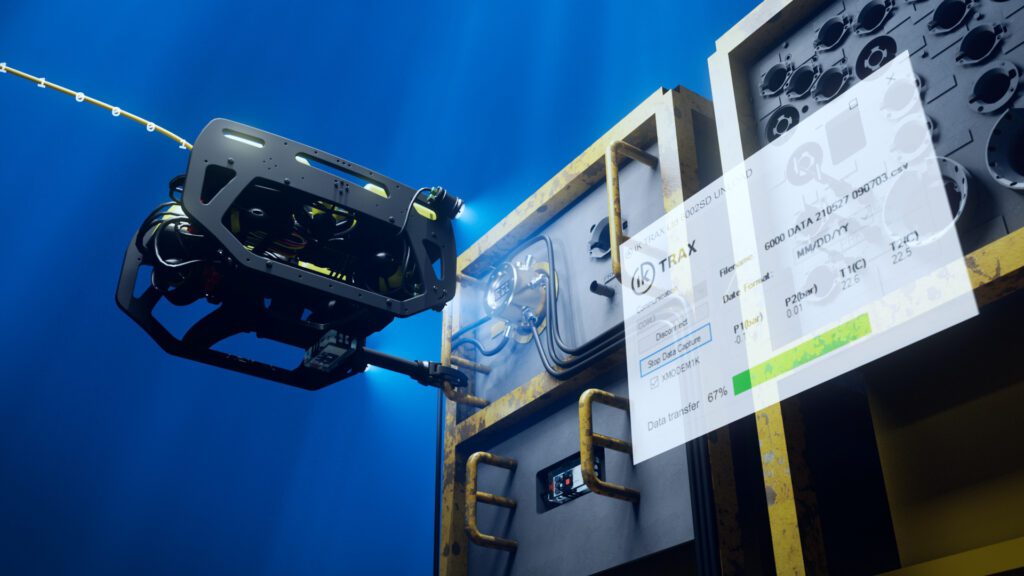
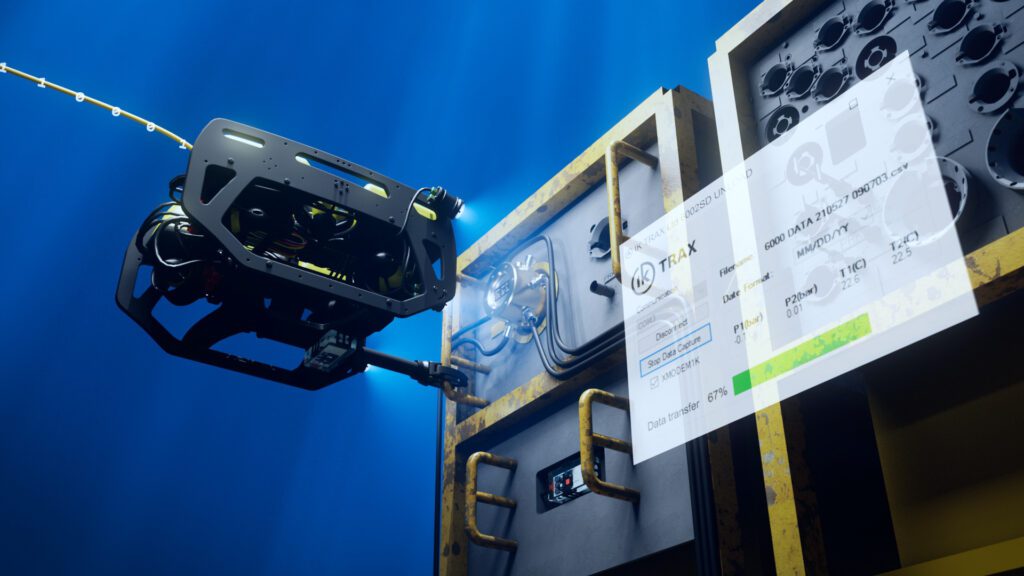
With the addition of an Optical Modem, logged data can be transferred subsea and transmitted to the surface through the ROV umbilical. This allows data to be retrieved faster and more efficiently without the need to recover the unit to the surface. Although Loop is a standalone solution, it is highly adaptable and can operate independently or integrate with other systems to enhance their capabilities and retrieve data.
Subsea Data Transfer
Where Loop Makes an Impact
Loop is designed to meet the needs of a wide range of applications and delivers valuable insights where traditional solutions fall short. Here is where it makes the biggest impact:
· Subsea pipelines – primarily for oil and gas and potentially hydrogen or carbon capture in the future
· Subsea applications – ideal for any subsea installation with sensors that require data logging
· Pre-commissioning pipelines – used during pressure testing and other pipeline-related applications
· Brownfield sites – enables data collection from older subsea installations that lack sensors
· Enhanced Oil Recovery (EOR) – provides valuable data from brownfield sites to help optimise recovery efforts
Overcoming Industry Challenges
Loop addresses several key industry challenges. There are often significant challenges in retrieving data from subsea systems due to slow and costly processes. Loop overcomes this with its Optical Modem subsea download, enabling faster and more efficient data retrieval. Integrating systems with existing subsea infrastructure is often complex and cumbersome. Loop’s flexible sensor connectivity allows it to interface with a wide range of sensors, not just pressure and temperature, enabling it to be used in a variety of applications. The difficulty of managing multiple technologies and systems is common. Loop’s standalone and modular design allows it to operate independently but it can also be integrated with other systems making it a versatile tool for subsea operations.
Conclusion
Loop sets itself apart with its innovative features, enabling faster and more efficient data retrieval, adaptable sensor compatibility and integration with existing subsea systems. It is a highly versatile tool for a range of subsea applications, from pipeline pre-commissioning to brownfield site monitoring. By overcoming key industry challenges, Loop can play a pivotal role in transforming subsea data management.
Want to find out more about Loop and its capabilities? Get in touch today.
IK Trax, an Aberdeen-based company specialising in Intelligent Pipeline Technology, has announced the launch of Loop – the Versatile Subsea Data Hub. With its unique multi-sensor capabilities, Loop provides seamless monitoring of subsea parameters in a compact unit providing crucial data for a broad range of subsea applications.
Equipped with 12 RS485-type sensors, Loop accurately measures and logs critical measurements such as pressure, temperature and flow. Its interfaced system consolidates all sensor data into one unit, streamlining deployment and simplifying operations. Data can be downloaded subsea using an optical modem through the ROV umbilical and viewed via dedicated software, providing a clear graphical representation for further analysis.
Data download via optical modem
“Loop represents a significant advancement in subsea monitoring technology,” said Gavin Duncan, R&D Manager at IK Trax. “By interfacing multiple sensors into a single, compact unit, we’ve created a solution that simplifies data acquisition and subsea data retrieval while maintaining the accuracy and reliability required for subsea operations.”
Loop has been designed with flexibility and adaptability in mind, catering to a variety of subsea environments and project requirements. Its robust, modular design allows for easy upgrades or customisation as operational needs evolve.
View downloaded data allowing for further analysis
In addition to pressure, temperature and flow monitoring, Loop can support a range of additional sensor options, including chemical concentration, salinity and conductivity. Clients with specific monitoring requirements can request specific sensor configurations, ensuring that Loop delivers the precise data they need for their subsea operations.
“With the launch of Loop, we’re opening up a unique opportunity for our customers to play an active role in shaping the future of this product,” said Charlotte Hope, Vice President at IK Trax, “If there are specific parameters they wish to measure, they simply need to let us know – this is a true collaboration between us and the customer.”
For further information on Loop, including its features, specifications, and how it can enhance your subsea operations, please don’t hesitate to get in touch with us at sales@iktrax.com.
Locating a missing tool in a subsea pipeline can be particularly challenging, especially when there are no means of tracking through traditional methods such as electromagnetic transmitters and receivers. During a recent operation, a magnetic surveying system was deployed to locate an in-line inspection (ILI) tool quickly and effectively, offering a reliable solution in a challenging environment. This case study highlights how it was used and its potential application in subsea operations.
Project Background
Our client was performing an in-line inspection as part of a pre-commissioning scope of work in the Mediterranean. During this process, the ILI tool, which was part of a pig train, was received in a damaged condition and part of the tool was missing. This posed a significant challenge, as the batteries in the transmitters on the standard bi-directional pigs – supplied by a third party manufacturer – had depleted, leaving no active signals to locate the lost tool.
A quick solution was required as locating the Magnetic Flux Leakage (MFL) tool was critical to avoid ongoing vessel costs and potential project delays. With no functioning transmitters but the presence of a magnetic source available, IK Trax proposed using a magnetic surveying system to locate the tool, an option that was quickly approved by the end client.
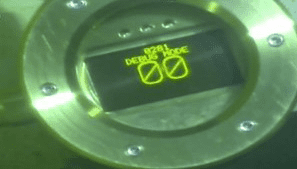
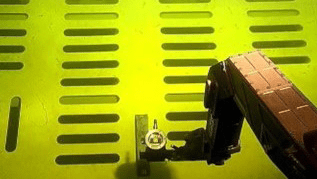
Our team mobilised a technician and equipment to the vessel, where they worked with an ROV operator to survey a 50m section of the pipeline and surrounding manifold area. The system was mounted in the ROV manipulator, with its screen visible through the ROV camera. The technician monitored the live readings displayed on the screen and, despite magnetic interference in the area, detected a clear spike in the readings when the tool was within range. This hotspot was within an electric valve and the results were confirmed through repeated scans leading to the successful identification of the tool’s location.
Magnetic Surveying System
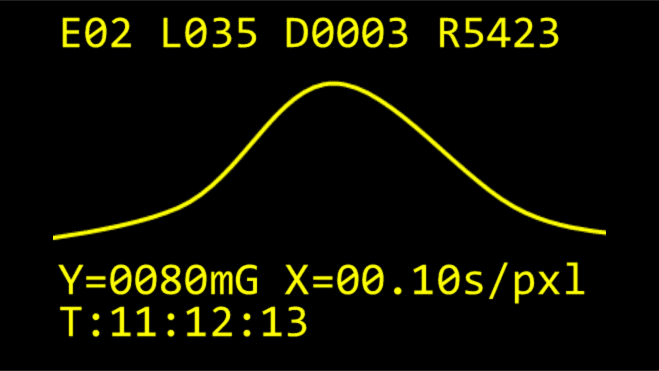
The magnetic surveying system provided real-time numerical or graphical representations of gauss readings. The system functioned as follows:
A live feed displayed variations in magnetic field as the ROV maneuvered through the pipeline area
Readings indicated a spike in the magnetic field, which implied a potential magnetic signature from the pig
The team used constant monitoring and fly-bys to confirm the location of the magnetic tool
Using this approach is most effective for shorter pipe sections where the approximate search area is already known. The system’s functionality demonstrates its versatility, proving its effectiveness in challenging subsea environments with potential magnetic interference from ROVs, manifolds and valves.
System Displaying Live Gauss ReadingSystem Mounted in ROV Manipulator
Future Applications
The successful deployment of the magnetic surveying system during this project highlights its potential for broader applications.
Contingency Planning
Operators can integrate this technology into their standard procedures as a contingency tool. It’s ability to detect magnetic fields without relying on active transmitters makes it an ideal backup solution for scenarios where transmitters are not available, for example when batteries are depleted.
Long-Term Subsea Operations
For operations requiring extended monitoring, such as when pigs are to remain in the pipeline for months or even years, this system can be used to track pigs equipped with powerful magnets instead of transmitters. This approach eliminates concerns about transmitter battery life while still providing reliable confirmation of the pig’s position, even after extended periods.
Real-Time Monitoring
The system’s real-time magnetic field readings offer operators a valuable tool for locating and identifying irregularities, enabling swift and accurate responses to unforeseen situations.
Graphical Representation of Gauss Reading
Conclusion
By using this magnetic surveying system, we were able to locate the missing tool quickly and accurately, saving the client both time and money by avoiding costly vessel time and project setbacks. This successful deployment highlights the versatility of the system and its potential to provide an effective solution in a wide range of operational scenarios.
When it comes to Electromagnetic(EM) Pig Tracking, knowledge of the pipeline specification is critical for selecting the right transmitter. Typically EM transmitters operate across different pipeline types – topside, subsea, buried pipelines or bundles and in gas and liquid lines. Several factors play a role in ensuring reliable signal detection and tracking performance. If the appropriate transmitter is not selected, the effectiveness of the system can be severely compromised.
One of the most important factors is pipeline diameter. For example, the IK Trax EMTx40 is a transmitter specifically designed for pig tracking in pipelines larger than 12 inches. Larger pipelines benefit from larger transmitters due to the increased distance between the receiver and the transmitter, making signal detection more challenging. In short, the bigger the pipeline, the larger the transmitter required for optimal signal performance.
Wall thickness also plays a significant role in signal transmission. Heavy-walled pipelines, launchers, receivers and pipe-in-pipe configurations can pose challenges. Wall thickness directly affects the EM signal’s ability to penetrate the pipeline. If the signal isn’t strong enough, it can become weakened or attenuated to the point of being undetectable.
Temperature and pressure are additional factors to consider. For example, transmitters used in deep-water pipelines must have high-pressure ratings to ensure they can withstand the pressures encountered subsea. Additionally, operating temperatures must be considered particularly in pipelines that transport product with extreme temperatures. Lithium cells are often preferred for these applications due to their ability to function at a wider temperature range when compared with alkaline cells.
Testing is essential whenever there is uncertainty about whether the pig tracking system is suitable for the application. This ensures the transmitter is configured correctly and capable of delivering reliable performance. Testing typically involves replicating actual project conditions as closely as possible to verify signal strength and overall functionality. By simulating operational conditions, testing minimises risk and ensures that the EM pig tracking system will perform effectively during operations.
Ultimately, selecting the right system comes down to a close collaboration between the manufacturer and the client. By understanding every aspect of the pipeline the manufacturer can recommend a solution tailored specifically to the project’s needs. Comprehensive testing ensures that the system will perform as expected in operational conditions, minimising the risk of signal loss and maximising operational efficiency.
Ready to optimise your pipeline pig tracking? Discover how our advanced electromagnetic transmitters can enhance your operations. Visit our Electromagnetic Transmitter Page to learn more!
This website uses cookies so that we can provide you with the best user experience possible. Cookie information is stored in your browser and performs functions such as recognising you when you return to our website and helping our team to understand which sections of the website you find most interesting and useful.
Strictly Necessary Cookies
Strictly Necessary Cookie should be enabled at all times so that we can save your preferences for cookie settings.
If you disable this cookie, we will not be able to save your preferences. This means that every time you visit this website you will need to enable or disable cookies again.
3rd Party Cookies
This website uses Google Analytics to collect anonymous information such as the number of visitors to the site, and the most popular pages.
Keeping this cookie enabled helps us to improve our website.
Please enable Strictly Necessary Cookies first so that we can save your preferences!